Skip to content

Category: Random Thoughts

Searching and Browsing: Lessons for Life from Libraries

Our campus is in the midst of moving from one email/calendar solution to another, and from local network storage to cloud storage. (Specifically, we’re moving from Zimbra to Gmail and Google Calendar, and from local network storage to Dropbox — we already use Google Drive but it doesn’t fill all the needs in the file storage area.) So all of a sudden there’s this moment where the campus gets to/has to think about individual and departmental practices and figure out if these processes can or must change during the transition. (Personally, I totally geek out on these kinds of conversations, but you’re not surprised to hear that, I’m sure.) Tucked into these conversations, there’s a topic in which two very entrenched camps face off: Do you rely on search to find your email or files? Or do you rely on a folder structure? In library terms this comes back to the age old balancing of search vs browse.

Here’s the thing (and take it from a librarian, because we’ve built a whole profession on this over many many many years) most people cannot rely only on Search or only on Browse. Most people need to have mechanisms that allow for both.

Here’s why. Search relies on there being the right letters-in-a-row in your query, which the computer then matches to the letters-in-a-row contained in the items it indexes or in the metadata associated with those items. If there’s a misspelling, if there’s more than one word for the thing you’re searching on and the other person used the other word, or if there’s no built in metadata for the type of thing you’re trying to gather, search will fail you. Search will be useful in many ways and may even be your primary entry point into your saved emails or files, but it is not sufficient.

This means that there also have to be mechanisms that allow for smart browsing. In email and file storage, these mechanisms are folders or tags or labels or whatever. In library catalogs these are subject headings and call numbers. These are the things that get applied in a consistent way to say “all of these messages are related in a meaningful way, regardless of the keywords and metadata.” It would take too much time to make everything browsable in all possible ways, so Search is also important if you have anything more than a very few emails or files. So Browse won’t work all the time, but it is important.

For me, it’s important that I have a way to browse just the emails between me and my students because I really can’t remember all the names of everyone who meets with me, or what words we used in our emails, so if I want to be able to go back to a conversation the only thing in my head that I can use as a hook to go back into my email and pull relevant messages out is “student.” So I created a folder for that. I have similar folders for major projects where I know I’ll need to skim back over information that I can’t gather together through a search. The same principle governs my folder structure on my computer.

For me, I rely heavily on search, especially for email. Probably 85% of my email goes into the main archived email bin without being tagged or put into a folder. But I’ve searched for enough things in my life that I know for sure and certain that it won’t solve all my retrieval needs. Browsing is also critical.

And just for a few more thoughts on organizing your stuff, here’s an archivist talking in simple and useful ways about using her professional training to help her with her computer files. Enjoy!

Leave a Comment
Spring Term 7th Week Burnout Blues

Carleton doesn’t have semesters or even quarters, we have terms. Each term is 10 weeks long, and there’s Fall, Winter, and Spring term. The week numbers of each term matter so much that at the end of every spring term I look ahead to the next year and enter “Week 1, week 2, week 3…” as events on the Monday of each week for the next year’s terms. Week numbers matter more than months or dates or days of the week. Classes start on the Monday of Week 1 and end on the Wednesday of Week 9. Then there are two Reading Days, and then finals run on Saturday, Sunday, and Monday.

Right now we’re at the beginning of 7th week of Spring Term, and it feels like we’ll never survive through to graduation next month. On top of that, it’s been a crazy intense year+ that’s left me burned out and used up. Apparently powering through Chronic Fatigue Syndrome while juggling a ton of extra work, a few massive transitions, plus all the normal intensity of this job only works for so long. The fallout is starting to show up in medical bills and mental anguish.

So how do I turn it around? I like my coworkers and don’t want to let them down. And I’m pretty sure that when I step out of my own head I actually still believe that the work matters. And then there’s the mortgage, which probably won’t pay itself. I want to get back to liking my job. I want to get back to liking me in my job.

2 Comments

Most fun instruction sessions ever

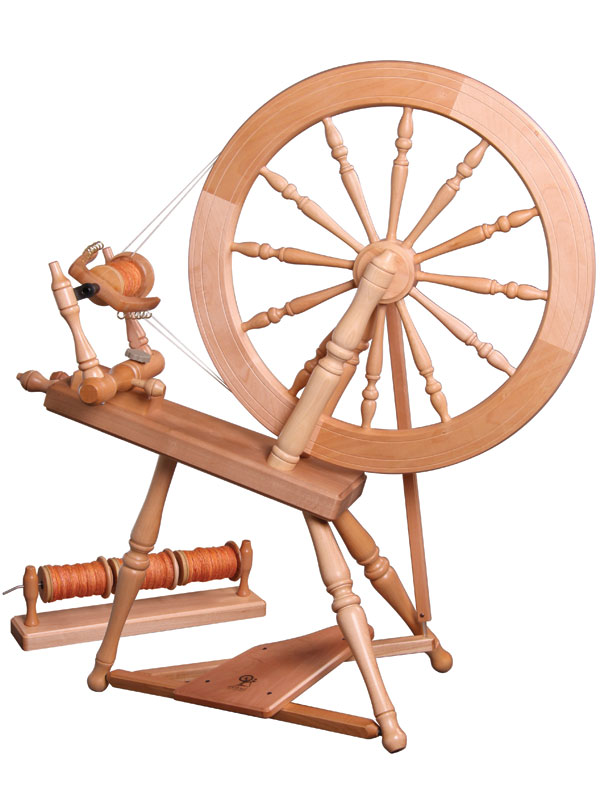
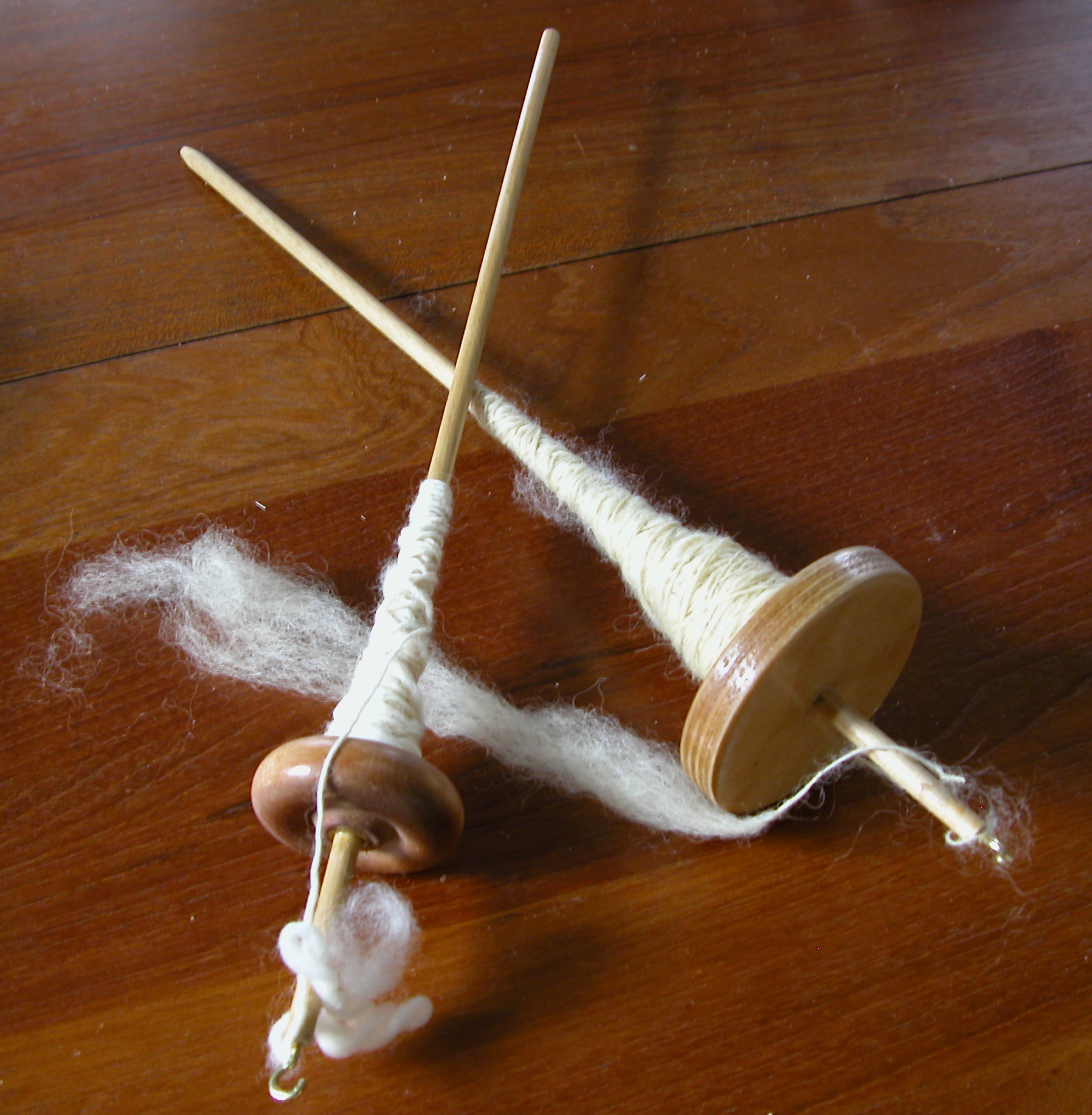
This is my wheel, plus the "lazy kate" to hold the bobbins for plying.
This is my wheel, plus the “lazy kate” to hold the bobbins for plying.

Last week and this week I got to expand my repertoire of class sessions into very new territory. I got invited to a class on early Anglo-Saxon material culture to demonstrate making yarn using a drop spindle and to talk about using that homespun yarn for weaving. And later I got invited to another class studying 18th Century English Workhouses (where the residents did a lot of spinning), to demonstrate making yarn with a treadle spinning wheel and then talk about knitting and weaving with that yarn.

Such fun! I got to use words I’ve never used at work before, like “lazy kate” and “niddy noddy.” Students got to try their hands at spinning with the wheel and the drop spindle. And the one down-side was that I hadn’t oiled my fly wheel recently so there was an annoying squeak. Oh, and that my nephew has hidden my orifice hook, so I had to use a crochet hook to thread the wheel. (Somebody needs to think of a better name for the orifice hook.)

I also got to tell them about sitting with an angora rabbit on my lap and spinning directly from his coat. (And also the other rabbit that hated me and would NEVER sit still for such a thing.) Such a different set of things from the things I normally tell students, and they were soooo much more interested in what I had to say. Database searching is never this fun!

One student in the Workhouses class is building a game scenario in which the gamer “spins” using the space bar as a treadle and some other keys as the hands working with the wool. He needed to know about treadle technique and timing, and he also timed me spinning so that he knew how many inches of yard I can produce per minute.

Next week I’ll rejoin the Anglo-Saxon class to do my demonstrations as part of their end-of-term project: a sort of pre-renaissance fair with demonstrations of all kinds of early Anglo-Saxon material culture. I might even get my very own apprentice.

Example of drop spindles

There was a lot to love about being involved in these classes, but one of my favorite things was that these were heavily digital classes, working with 3D modeling and game design, and here I was doing the farthest thing from digital work I can imagine — making yarn from sheep’s wool. The juxtaposition was delicious.

Leave a Comment

Calling All LSW Members: It’s time to reunite

LSWlogoBack in the ancient days of social networking, all the way back in 2007, my friend and former classmate Josh Neff posted a tweet that rocked the library world, we just didn’t know it yet. He declared that there would be a library society that didn’t charge dues, and that this society would be called the Library Society of the World. My friend Steve Lawson took up the call, and I signed on as a “founding member” along with several others. We gave each other goofy titles and made up goofy bylaws (my contribution was that we would always be one short of a quarum). After a while we set up a chat room on Meebo (remember Meebo??), and a while after that we took up residence on FriendFeed. And little by little it dawned on us that we weren’t joking any more. We were a real library society comprised of library folk from around the world.

In the 7 years we lived together on Friendfeed, membership grew to the thousands depending on where you counted, friendships blossomed and drama came to visit from time to time. Some people left the profession, and new librarians were born. FriendFeed got bought by Facebook (and donated likes and threaded comments to the Facebook interface). And finally Facebook pulled the plug on us in April of 2015.

For nearly a year we’ve been in diaspora. Some went to Facebook, some went to Slack, others went back to Twitter. We tried message boards and Frenf.it. Nothing felt like home.

Then mokum.place appeared. And now I’m mounting the call: it’s time to come home! LSWians Unite! And if you aren’t sure just how much like home it will feel, here’s a screenshot for you. Look familiar?mokum

2 Comments

The Digital Humanities and the Librarian

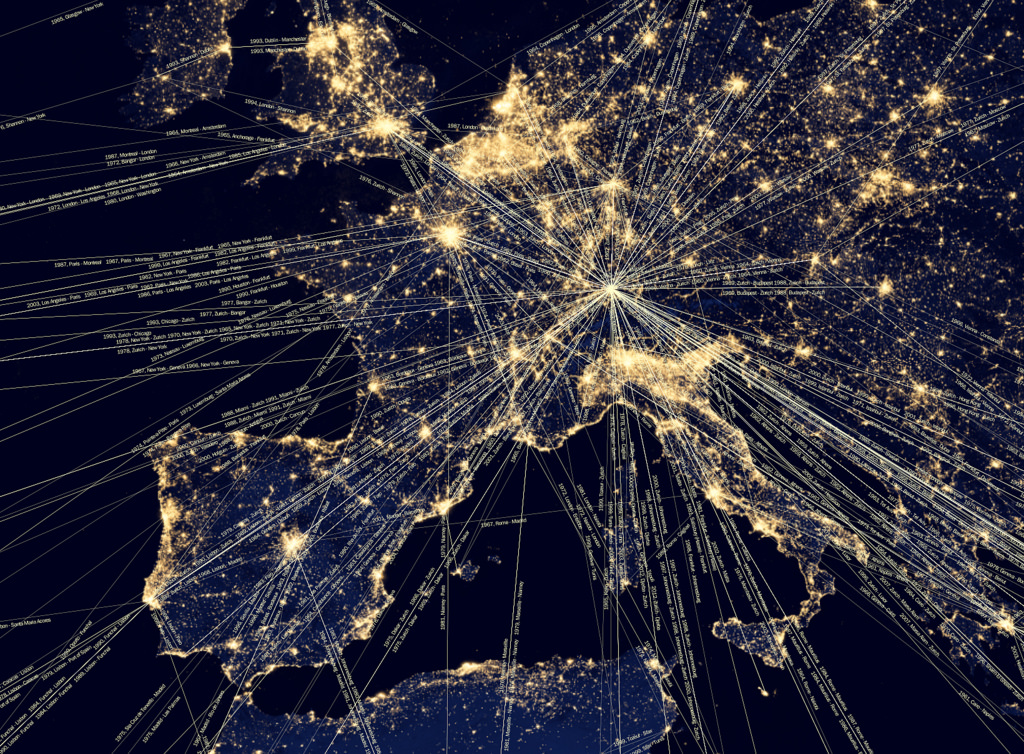
map visualization
Image by raph.ae/

Here at Carleton I’ve been tasked with helping to draft a proposal for a campus-wide digital humanities initiative and infrastructure. Being the librarian that I am, I’ve been spending a good deal of time reading the literature of the field in addition to investigating potential model programs at other institutions and pulling together what amounts to a SWAT analysis about our own institution. And one of the really interesting things in the literature of the field is how librarians are thought of (and think of themselves) in relationship to DH work.

There’s a sizable camp of  vocal “librarians should be full partners in the research” proponents. There are quite a few “provide good, quiet service and provide it well” advisers. There’s the “this is a new thing for librarians so we really need to figure out what we can do” camp. And there’s the “there’s nothing new under the sun for librarians so just do this” camp.

I fall somewhere in the middle of all this. There aren’t well-oiled mechanisms here or at many other institutions for humanists (as opposed to scientists) who want to do digitally inflected research, and yet this research is becoming more and more of an expectation in humanities fields. So in that sense there’s an awful lot to figure out, cobble together, and invent when it comes to supporting this research.

On the other hand, librarians have always studied and supported information use and dissemination, research methods, and scholarly communication cultures. We have always fought to make sure that intellectual freedom is a reality and that everyone has a chance to create new knowledge from the record of human thought. These things sit at the core of our profession — the core of our guiding documents and professional ethics.

A few years ago the humanities departments I serve became much more dependent on data and statistics as they engaged in scholarship, so I learned what I needed to know about finding, understanding, and using numerical information. Right now it’s becoming clear to me that the humanities research in my departments has taken on a decidedly spacial flavor, so it’s time for me to learn enough about spacial analysis and GIS to be conversant with the information and methods of the scholarship in my areas. And while I will never be a GIS specialist, basic familiarity is no more outside of my professional scope than leaning database searching was for the librarians who trained me. The stuff of scholarship changes, but our professional expertise lies first in understanding and facilitating how information flows and functions within scholarship, and it lies second in understanding the mechanics of locating the particular kinds of information that happen to be in use at the moment.

On top of all of this, the information that makes up the bulk of the data for humanities scholarship resides in various kinds of libraries, the “labs of the humanities.” The ties between librarian and scholar have always been particularly strong in the humanities. We geek out together over dusty codexes and digitized primary source collections, monograph browsing and frustratingly jargonless full-text article searching, bulky archival boxes and streaming video collections. Humanities scholarship has never been the solo enterprise that has gotten so much air time lately. Librarians and scholars have been there for each other through the ages, though the librarians’ role is often invisible to the broader community. The librarians aren’t listed as co-authors (and shouldn’t be!), but they do participate in very real ways in humanities scholarship’s inception, feasibility, creation, dissemination, and use.

So I think librarians and scholars function best when they are full partners with each other, and I think that “full partnership” often means playing a pretty invisible role.* I think that there is a lot that’s new that needs to be figured out, and I think there’s nothing new under the sun. But most of all I think that this is our world and our reality, and I think that we are equipped to tackle it, messiness and unanswered questions and all.


* There are some problems with invisibility, including things like being underpaid, over worked, etc. But that’s a topic for another post.


Here’s a bibliography of things that contributed to me thinking these thoughts.

Aarsvold, Nancy, Kasia Gonnerman, and Jason N. Paul. “Shaping the Roles of Academic Librarians to Meet Emerging Demands of DH Scholarship.” In Supporting Digital Humanities for Knowledge Acquisition in Modern Libraries, 44–65. Hershey, PA: Information Science Reference, 2015.

Maron, NL, and Sarah Pickle. Sustaining the Digital Humanities Host Institution Support beyond the Start-Up Phase. New York, NY, 2014.

Nowviskie, Bethany. “Asking For It.” Nowviskie.org, 2014.

Posner, Miriam. “No Half Measures: Overcoming Common Challenges to Doing Digital Humanities in the Library.” Journal of Library Administration 53, no. 1 (2013): 43–52.

Schell, Justin, Jennie M. Burroughs, Deborah Boudewyns, and Cecily Marcus. “From Digital Arts and Humanities to DASH.” In Supporting Digital Humanities for Knowledge Acquisition in Modern Libraries, edited by Kathleen L Sacco, Scott S. Richmond, Sara Parme, and Kerrie Fergen Wilkes, 234–252. Hershey, PA: Information Science Reference, 2015.

Vinopal, Jennifer, and Monica McCormick. “Supporting Digital Scholarship in Research Libraries: Scalability and Sustainability.” Journal of Library Administration 53, no. 1 (2013): 27–42.

What would you add to this list?

2 Comments

Email List Politics: a brief local guide

I’m sure most campuses have a similar point of hilarity. On our campus, the hilarity has to do with mass email communication. There are three email lists that govern our lives: the one for all faculty, the one for all students, and the one for all staff.
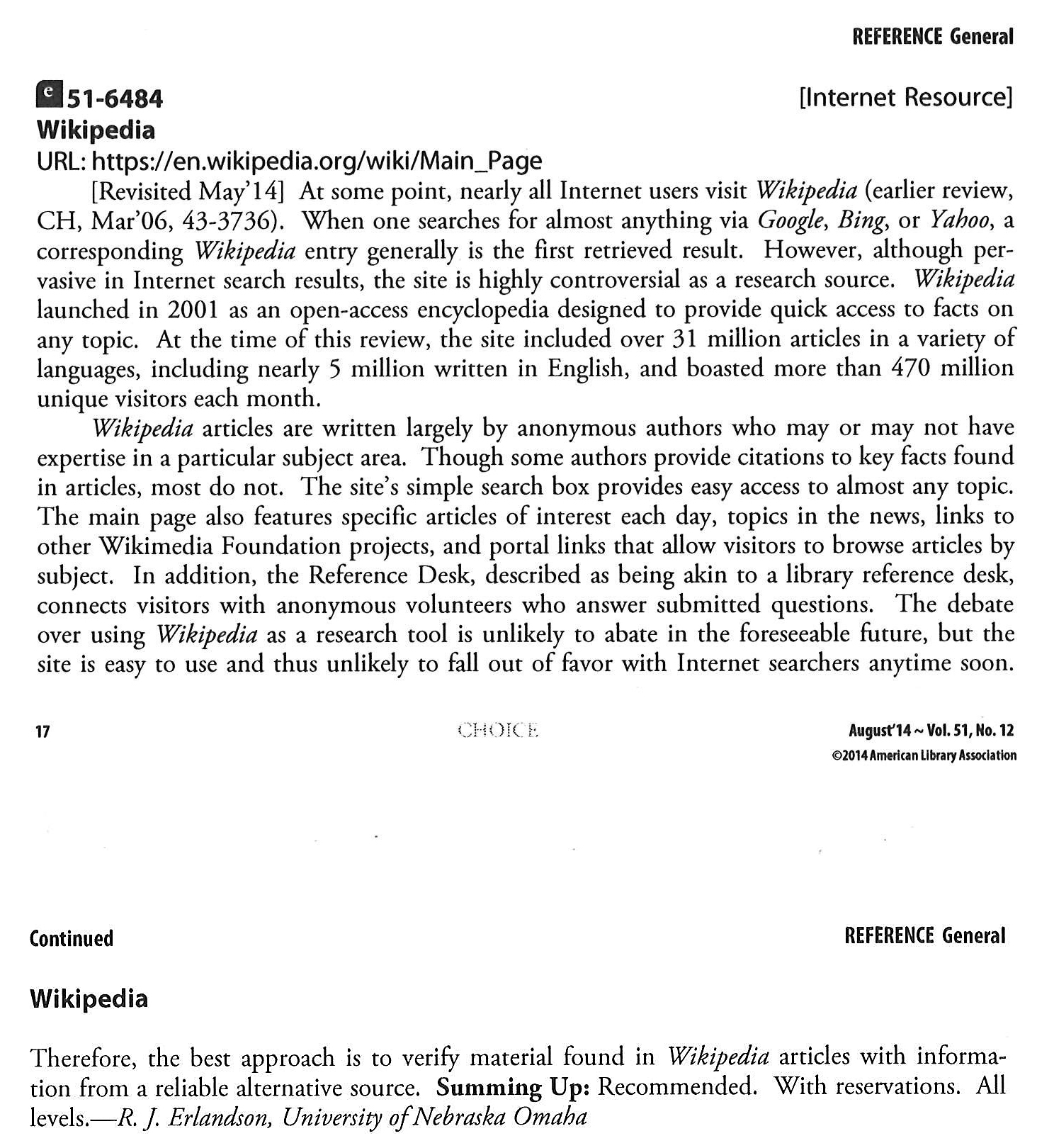
On our campus, only the faculty and the Dean of the College’s office can email all faculty, only the Dean of Students’ office can email all students, and everyone can email all staff. So I’ve been in meetings where people say “Well, we’ll email all staff and they can forward it to interested faculty or students.” Meanwhile, the staff get the PDF newsletters from all the different departments, the special event notifications… basically, we know a lot about a lot of stuff on campus.

1 Comment

Why yes, I am hopping mad. Here’s why. #teamharpy

Ok, I wasn’t going to write more about this. I felt like other people were doing a much better job, and I don’t have much of substance to add. And besides, writing about this kind of thing is apparently risky business and I’m kind of risk averse. But here’s the thing: I’m mad. So here I am again.

I’m mad because I myself am reluctant to put names into the sentence “So-and-so created a hostile environment for me and other women at such-and-such conference” in a public and googleable place. I’m mad because women like Amanda, who experienced blatant and totally illegal sexual harassment at conferences, are afraid to name their harassers. I’m mad because the sentence “But he continues to be famous and I’m just a small fish in libraryland” is such a ridiculously common theme in these conversations, and such a silencing force in our profession (the quote is from Amanda’s post).

The only men who have created hostile environments in gatherings of librarians that I’ve been part of (online and off) have been big name librarians who are on the keynote speaking circuit. I have seen pictures of their naked crotches. I have seen pictures of their daughters in bustiers. I have heard them use their keynote microphones to talk about tea bagging. And I have heard of them doing even more things of this nature that I didn’t witness directly, like using the phrase “you ignorant slut” towards fellow panelists.

And yet they continue to rise through the ranks of librarians and become more and more powerful. These kinds of things are apparently “all in good fun” and hilarious jokes.

Here’s news for you powerful men and the conference organizers who keep you in business: These things are not funny. I no longer attend your sessions for a reason. And no, I am not a super sensitive little girl who just needs to grow up and realize that you’re joking. I have a pretty good sense of humor, actually. Cut it out.

Looking for a way to help out? Consider supporting #teamharpy with words or money or both, and let conference organizers know when this kind of thing happens to you.

[Edited to add: for those of you who don’t know about #teamharpy, conversations about sexual harassment in libraryland were recently sparked off by one prominent male librarian suing two women for 1.25 million dollars. He’s claiming defamation because they spoke out about his harassment. Libraryland is in heated conversation, now, about power dynamics, the silencing affect that lawsuits like this cause, and exactly how much of a problem this is, and how prevalent. Right now the message is clear, speaking out is more dangerous than harassing.]

12 Comments

Summer of Construction

Road-under-constructionThis summer will be a summer of upheaval in my physical spaces around me. We still have 4 weeks of classes before summer starts here, but the upheaval isn’t waiting for such things as academia.

The academic support center is moving into the library (so exciting! so many possibilities for closer collaboration!). All but 3 Reference & Instruction librarians are moving offices (some into offices that will be newly constructed because of the academic support center moving in and using space that currently has some of our offices in it). Our technical services department (which is having space carved out of it for the displaced reference librarians) is being completely torn up and redesigned. All the lab computers in the library are up for replacement. The stone on the outside of the reference area half of the building has to be torn off and replaced. The stairwell in the reference area has a crack in the wall and needs repair. We’re putting in some new moveable shelves. An area just in front of the library needs to be torn up and rebuilt.

Meanwhile at home, the city is tearing up my street and replacing water and sewer lines and such (and it has become clear that the city doesn’t quite know how any given house gets its water and sewer connection, so confusion abounds).

Any one of these things would make for an adventure, but all of it together? I’ve decided to choose to find everything related to all of this both exciting and hilarious.

Also, if there are any more potential disruptions, this summer is definitely the time to squeeze them in while we’re all helter skelter anyway. Strike while the iron is confused!

2 Comments

sticky clients… no, not those clients

wifiI’m talking about computers, not people, and especially about getting wifi on those computers. Like lots of large places built in a pre-networked era, our building presents special challenges for our poor network staff. IT has worked long and hard configuring and reconfiguring, and yet we keep having trouble getting reliable connectivity. And now I know way more about wifi connectivity than I ever expected to.

So in case your library is having a similar experience, here are the three factors that seem to be/have been causing our dropped connections.

First, networks were not invented with the idea that a single person is likely to have at least two devices pinging the network all the time — a phone plus the laptop, plus maybe a tablet or an ipod or who knows what other wifi-enabled device. IT here added a bunch of capacity for this and so it seems no longer to be an issue for us. Thank goodness.

Second, unless you get dual-band radios for your signal, the radio has to go with the lowest common denominator for signal type: a, b, or g. So if one person with an older laptop comes in needing an “a” signal, the whole area bumps down to “a” signal. So our IT department got us lovely new radios so everyone could be happier in the same space. Thank goodness.

Third, and this is the kicker, it turns out that there’s a sticky client issue built into the very foundation of networking. The way it was explained to me is that back in the day when they were first inventing wifi, they couldn’t conceive of people moving around while also needing wifi. They could only conceive of local networks among stationary computing stations. Flash forward to today, and you have computers who basically mate with their favorite wifi radio and will desperately hang onto that signal however weak and far away, meanwhile completely ignoring the beautiful strong signal of a nearer radio. There’s even a whole paper about it and how people are trying to solve it. So our IT department is working on this fix in hopes that it will make everything work a lot more smoothly.

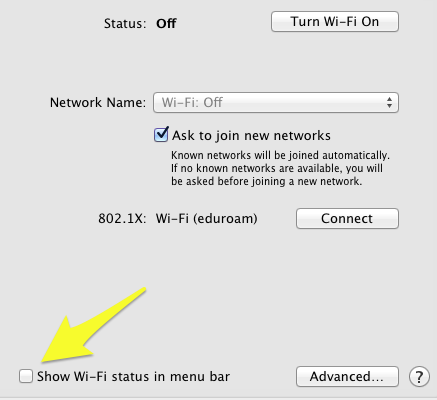
Oh, and if you’re on a Mac, you’re a particularly sticky client. Also the little wifi signal strength indicator could be interfering with your actual signal (headdesk) so I’ve disabled mine. Kind of a pain, but I drop signal a whole lot less frequently.

Network-2

Comments closed
css.php