Skip to content

Author: admin

Morning of Nerddom: appointment schedulers and feedback forms

First of all, I’m back! I’ve been devoting any writing energy to some article revisions, but now those are all submitted and I don’t have to feel guilty about cheating on my article with my blog. What a relief.

Anyway, this morning I spent nearly all of my time shirking other responsibilities in order to set up an appointment scheduler and some feedback forms. A couple of my colleagues use and love schedulers, so I thought I’d give it a try, and I’ve been hearing non-stop lately about the value of very very brief assessment, so I thought I’d try that in a more formalized way, too.
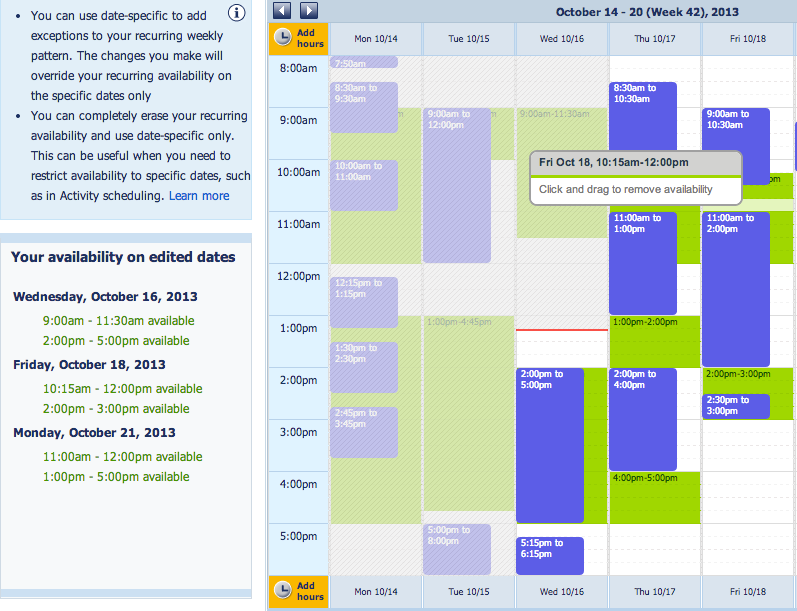
How my calendar looks to the scheduler
How my calendar looks to the scheduler. Blue is “busy” time from Zimbra via Gcal (this trumps available time). Green is available time that I can add to or erase by clicking and dragging.

I heard about ScheduleOnce on a recent friendfeed thread and made an account almost on a whim. “I’ll poke around and maybe set it up later.” Famous last words. It’s pretty nifty and lets me do pretty much all of the things I want, and some things I didn’t know I wanted. For example, I could set it up to send a reminder email to the student (maybe fewer no-shows?), and tell it how soon before the desired appointment time a student can book me. The one catch is that it’s made to work with Google Calendar, and my school uses Zimbra, so I had to import my Zimbra calendar into a google calendar (there are some limitations with this, but it’s better than nothing) and then tell ScheduleOne to look at the imported calendar for busy times (which required an upgrade to the $5/month plan). But if it works, it’s totally worth it to me.
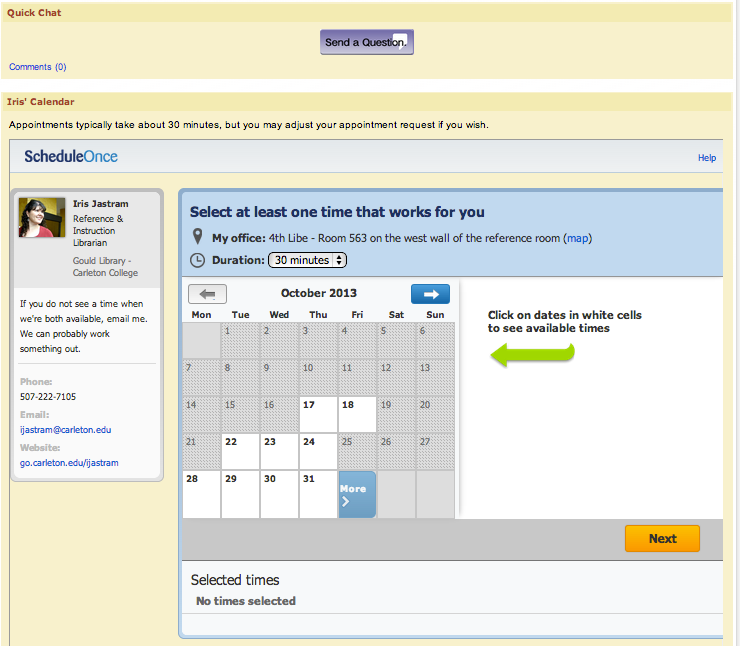
What my students see

After a couple hours of tinkering and testing and tinkering and importing and syncing and cursing Zimbra/Gcal quite contentedly, I embedded the scheduler page in my liaison page and thought I was done.

Then I remembered the “follow-up email” option in the scheduler that I had turned off. Who needs more email, right? Well, maybe people will give me some basic feedback if I ask nicely. So I hopped over to Google Docs and made a feedback form that basically asks two questions: “how satisfied are you” and “do you have follow up questions” (if yes, email me, because this form doesn’t collect any identifying information. Then I leave the traditional optional space to tell me more. Done. I added the link to a follow-up email thanking the student for the research meeting and telling them to email me if they have further questions, and I figured I was done.

But no. This made me think of the people talking about having students fill out forms embedded in libguides at the end of instruction sessions. I’ve done the “on the front of the notecard write something that was new and/or helpful; on the back write something that is still confusing or you’d like to know more about” kinds of exercises on occasion, and I’d love to do more of them, but I often don’t have notecards at the last minute. So I basically made that into a Google Form, embedded it in a page on libguides, and now I’m set to copy that page to any other guides I make. Tada!

And thus ends my morning of nerddom.

Update: 10/31/2013

This is going exceptionally well so far. I’ve done a few user error things along the way, but over all it has been such a help. Almost no futzing with calendars every day, and almost no back-and-forth emails with students about meeting times. I’m in love!

3 Comments

We’re Published! “Swimming the Matrix: A Dialogue on Teaching Undergraduate Research”

Danielle Theiss and Kiane Kovacs have edited and published a book inspired by the work and writings of Barbara Fister, one of the librarians I most respect in the profession for her complex thinking, clear writing, and general all around amazingness as a person.

The book itself has chapters of all kinds, each of which is inspired by the three main areas of Barbara’s public voice: Change and Academic Librarians, Student Learning and Research, and Publishing and the Academic Library. And one of those chapters is a dialogue that Steve and I had about working effectively with undergraduates. It’s decidedly not  your average library science essay, and it was awfully fun to do. We hope you’ll enjoy reading as much as we enjoyed writing it!

Jastram, Iris, and Steve Lawson. 2013. “Swimming in the Matrix: A Dialogue on Teaching Undergraduate Research.” In Finding a Public Voice: Barbara Fister as a Case Study, edited by Danielle Theiss and Diane Kovacs, 69–84. Chicago: ACRL.


p.s. Kudos to ACRL for their fabulous author agreements.

2 Comments

The OTHER nasty underbelly of copyright

We got a letter from the Copyright Clearance Center on behalf of someone who wants permission to use a chapter out of a book published in 1960, so I set about figuring out what the book was and who could sign for the college. Simple right?

The permissions request form listed the author as Pierre Corneille and the book as “The Continental Model.” Ok, off to the catalog. Surely we own something if people are asking our permission for it. But the author’s name didn’t bring anything up, and it listed him as being alive and kicking in the 17th century, so that was confusing…

Then it turns out that Corneille was the original author of the chapter in this work of compiled essays, and the essays were all translated from the french by two guys. Ok, so this would probably be pretty straight forward. I’d just check to see if they’d renewed the copyright before sending the paper work over to the vice president’s office and he’d sign and we’d be done.

So I searched the Copyright Renewal Database from Stanford REALLY hoping nobody had renewed it so that I wouldn’t have to keep figuring out if we owned the copyright. Unfortunately, they had. And just to throw an extra wrinkle into the mix, the two authors were listed as the renewers, which probably means Carleton doesn’t own the copyright. So maybe this won’t be so bad. I’ll figure out if one of them is alive and send the paperwork off to him.

But then I found both of their obituaries. So now I have to figure out if the copyright might have fallen to us. WHAT A PAIN. So after a couple of phone calls, it seemed like the next step was our college archives. We need to know if there’s any contract that would tell us that we’re the copyright holders. And just to make this more interesting, the book turns out to have been jointly published by Carleton and by the University of Minnesota Press, and have been published using grant funding provided by then-president Larry Gould (for whom our library is named, by the way).

So then the archivist hunted for any paperwork associated with the two professors or with that grant from Gould. He didn’t find anything, so now we’re pretty sure that since the two guys renewed the copyright, their estates must hold the rights. The poor prof will now get a form letter back with the “I do not hold rights to this work” checked.

And the kicker is that, the prof who asked for our permission has asked to use one chapter from a book, and to use it for a class reading distributed to five students. So the use falls squarely within fair use, but there’s no way on this earth that the Copyright Clearance Center is going to pass that message on to the prof from me.

What a royal pain! We should start charging the CCC for fear mongering.

2 Comments

Motivation Follows Action

This has really been my first week of “summer.” School runs through mid-June here, and then there’s Reunion to keep us busy, and then sophomore portfolios to read and annual reports to write. Then I always need a week of down time before my brain can shift gears from Interruption Mode to Project Mode, so I spend that week sweeping up the crumbs from the school year, reading things, filing things, tossing things, and generally resetting my brain and my work space. Then comes the equally important week of vacation with my family during which my goal is to be as boring as possible.

Which brings us to this week. This week kicks off the summer projects. Some are really interesting and some are just necessary, but somehow I have to motivate myself to get through them all. So this year I’m trying a new approach: Motivation Follows Action. I say that all the time, and I find it’s true for me, so now I’m trying to put it into practice in a more systematized way.

Here’s the plan. I’ve posted my list of big summer projects on my wall in big letters. Each day, I have to touch at least two of them, no matter how minor the touch. There will be other things that crop up (there always are) so this leaves me plenty of wiggle room, but at least I’ll be making progress for sure.

So far, this is working well. So far I’ve pretty consistently thought, “I don’t really want to work on x but if all I do is figure out where the old file is on the server so that I can update it later, that’ll be a step,” and then find myself doing a morning’s worth of work on the project.

Motivation follows action so far. Fingers crossed that it continues!

1 Comment

If Copyright had a reality TV show…

I can see it now. The teaser for the premier would quote TechDirt’s post: “‘Warner/Chappell is almost certainly guilty of massive copyfraud — perhaps the most massive in history — in claiming a copyright it clearly has no right to.’ And what is this this copyright they’re talking about? A copyright that’s so lucrative Warner/Chappell will go to any lengths to keep people paying for permissions and so ingrained in our culture that people will shell out permissions money right and left to be able to include the copyright work in their representations of our life? Find out on this week’s episode: The Dark Side of ‘Happy Birthday.’“

bd6cf791a464fadad40f4438fe5e36e35dThat’s right. “Happy Birthday,” that famously copyrighted work that plagues script writers everywhere and that earns Warner/Chappell millions a year in licensing fees? Probably isn’t copyrighted after all. Oops.

So pop some popcorn, grab a beverage, and let’s see how this plays out!

Leave a Comment

Things we know about how information works that our students do not (yet)

Sometimes when I teach first year students how to use a book (the table of contents and index are the “google of the book” telling you what’s inside and where to find what you want) I get shocked looks from profs. In fact, last week one prof argued gently with me that I was surely mistaken that this kind of thing was news to our first year students. Surely they know how books work, how periodicals work, or that encyclopedias are often ordered alphabetically.

Well, thank goodness for Barbara Fister who just started compiling a list of just these kinds of things, where we have a tacit understanding of how information works but our students do not. Everything on her list resonates strongly with me and my experience of first and second year students.

Go read it! Tacit Knowledge and the Student Researcher

2 Comments

Managing a collection is easier without all those books in the way: The Urbana Free Library’s lesson for the rest of us

It’s kind of a common joke among librarians: “Our jobs would be so much easier without the patrons.” It’s the kind of thing we say in a moment of frustration that both allows us to vent and also reminds us why we’re here in the first place. We would never lock our doors to keep the patrons out — to “protect” our collections and our time.

Apparently the library director at the Urbana Free Library, Deb Lissak, decided that her staff’s jobs would be so much easier if there weren’t any books. And rather than sigh and get on with life’s little frustrations, she actually acted on the impulse. In the space of a few hours, and without the knowledge of the librarian in charge of the collection, she had 12 new staff weed 50-70% of the adult non-fiction collection using publication date as her only criteria. Looking for a non-fiction book published before 2003? You won’t find it at the Urbana Free Library.

Of course, thoughtful weeding is a vital part of maintaining a useful collection. This, however, does not resemble thoughtful reading in the slightest. This resembles a daycare dumping basins of bathwater without checking for people’s babies first.

Somehow, of all the appalling aspects of this story, her stated reasoning is what gets me the most.

[It] has to do with RFID [tagging]. We have to touch every single piece in the collection and have to tag it… And you don’t want to be doing all that and then find you’re — six months from now — you’re weeding and taking things back out you just went to the trouble of doing this for. (Quoted here)

There you have it: proactive weeding. We might find we want to weed it later, so we’ll just weed it now instead. The ultimate in efficiency.

Meanwhile, the library is telling its patrons not to worry, that this will make browsing easier. It’s so much more efficient to browse 10 books compared to 50 books. You’ll love it!

Libraries sure can be more efficient without those pesky collections.

8 Comments

Reasonable Expectation of Privacy, the NSA, and the value of metadata

My nephew still likes phones.
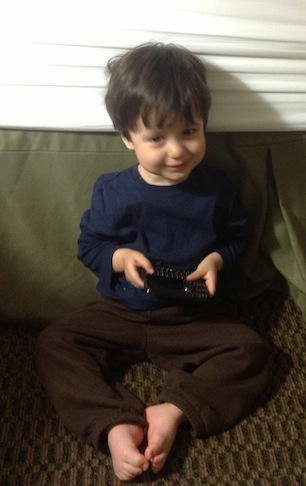
My almost-two-year-old nephew still likes phones.


A week ago, the general public didn’t know or care about metadata. Now, thanks to the NSA, it’s all anyone talks about. Meanwhile, the Supreme Court has already said that this kind of information collection without a warrant is fine because there’s no reasonable expectation of privacy attached to this type of metadata.

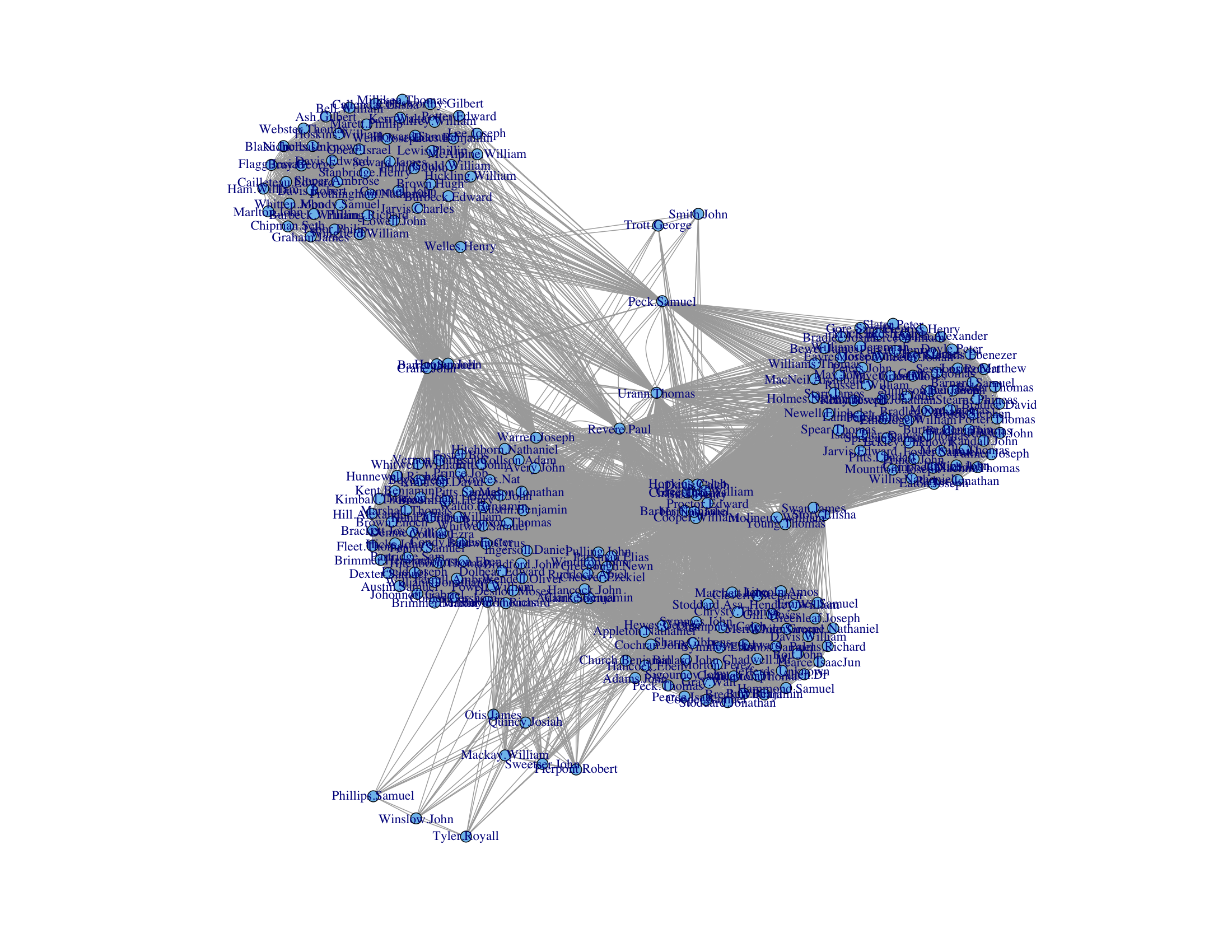
Using Metadata to Find Paul Revere

How much do people value information about the calls we make — the numbers we dial and the length of our calls? Quite a lot, it seems, even when they (supposedly) aren’t able or allowed to listen to the calls. You can do cool things with metadata about who contacts whom.

In libraries, we’ve know the power of metadata for a really long time. We’re in the business of creating, buying, licensing, and using metadata. And library vendors are in the business of charging us an arm and a leg for metadata, and of forbidding us from sharing their metadata. Their metadata is powerful. And above all, their metadata is theirs. Do not mess with their metadata.

Granted, cataloging and indexing produce rich, multi-facetted metadata, and the NSA is looking at “thin” metadata — nobody’s gone through the calls and classified them according to topic (we assume). This is the equivalent of author, title, and publication information. But perhaps telephone and internet companies will now be looking to library vendors for some pointers on making a tidy profit on all their metadata, especially now that we all know it’s not legally private after all.

It’s probably too much to hope that libraries will get better deals from vendors on the strength of an argument about how metadata isn’t private. The ultimate Open Access: nothing is private.

p.s. To any non-librarian readers: Libraries complete destroy your check-out records on purpose so that the government can’t ask us for it. Just FYI.

Leave a Comment

Bagel Study Break in the Libe: A story in pictures

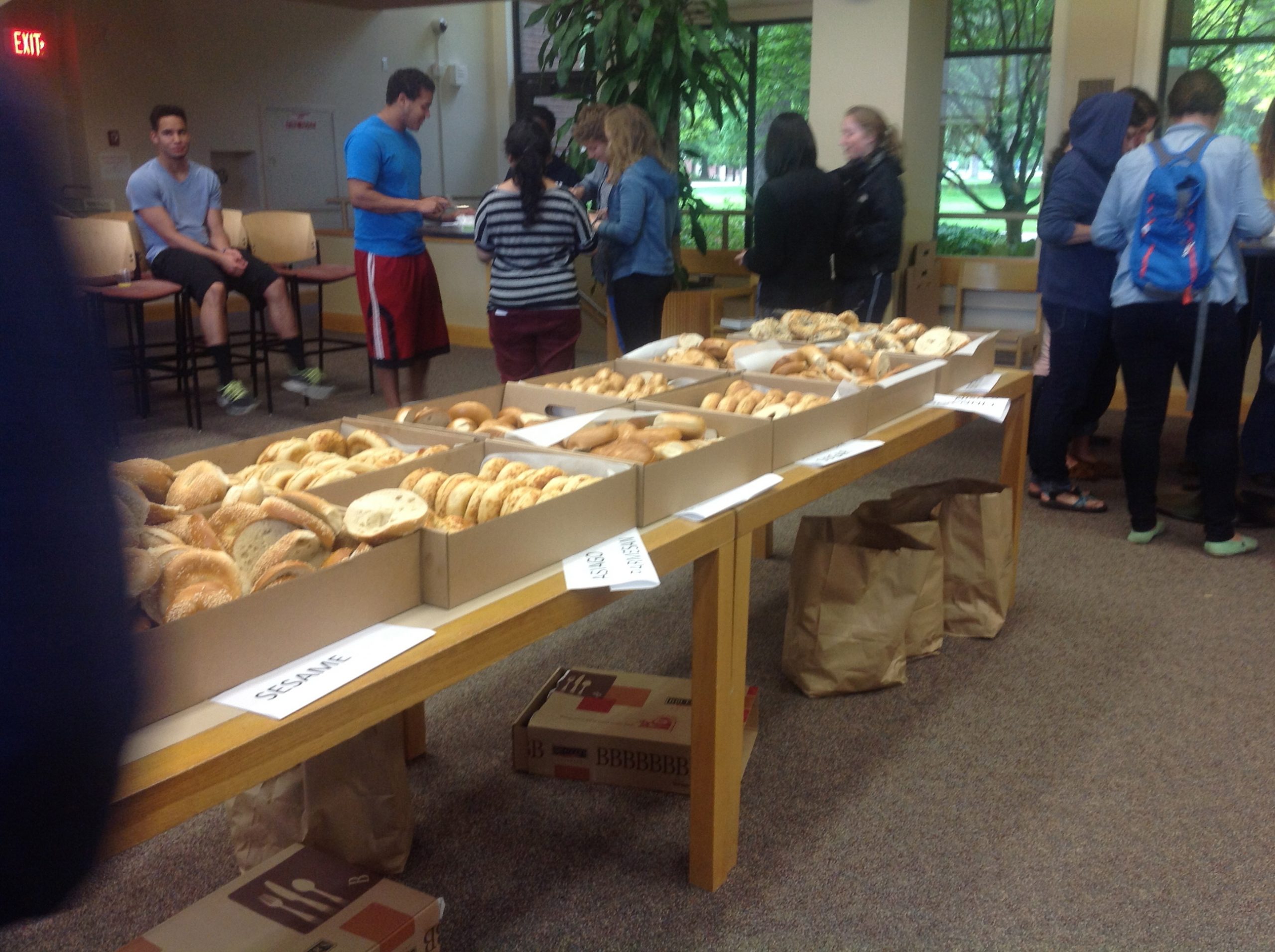
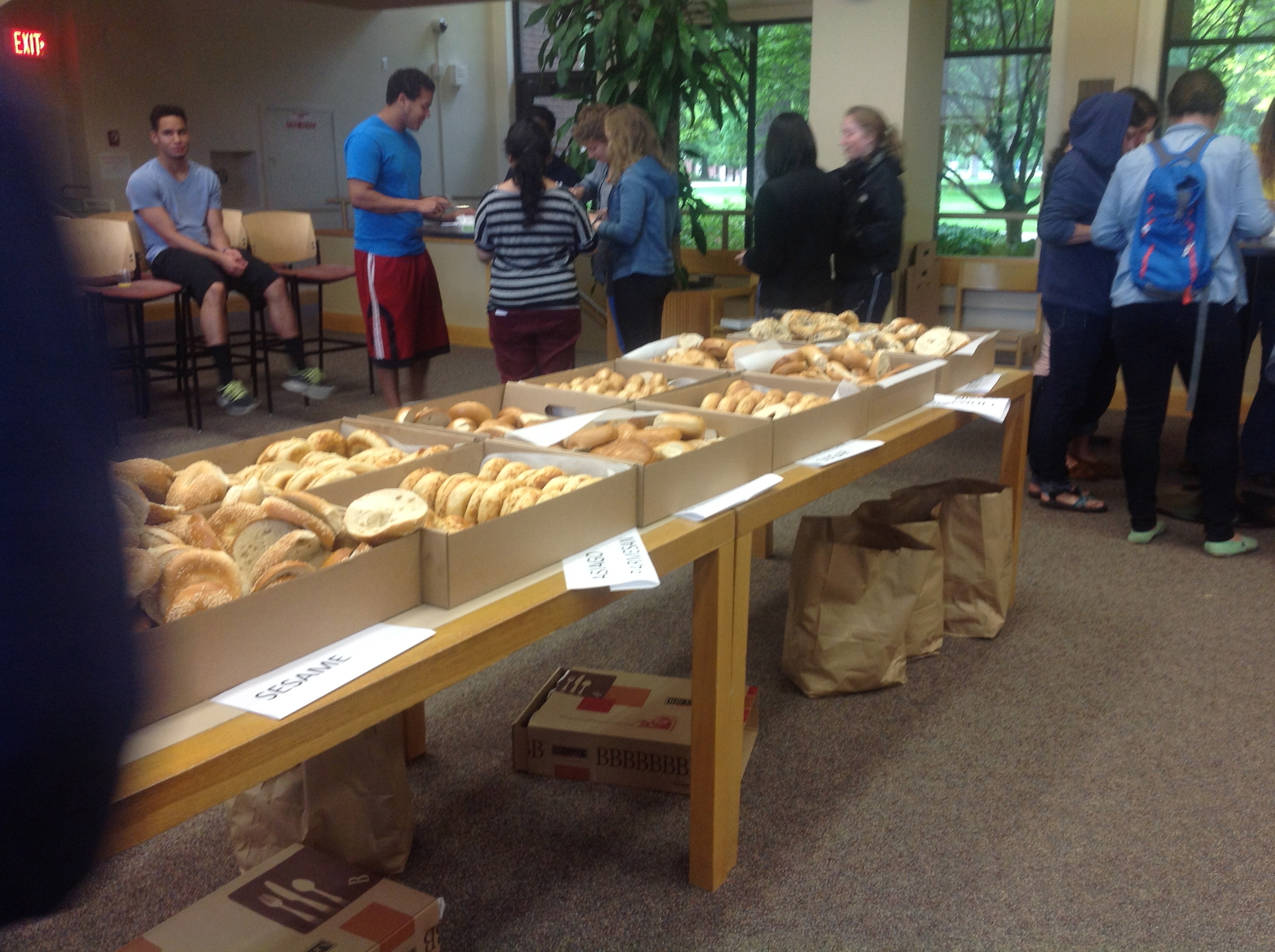
Yesterday we hosted our traditional bagel study break for reading days. As usual, the bagels went fast.

Hundreds of Bagels
Hundreds of Bagels
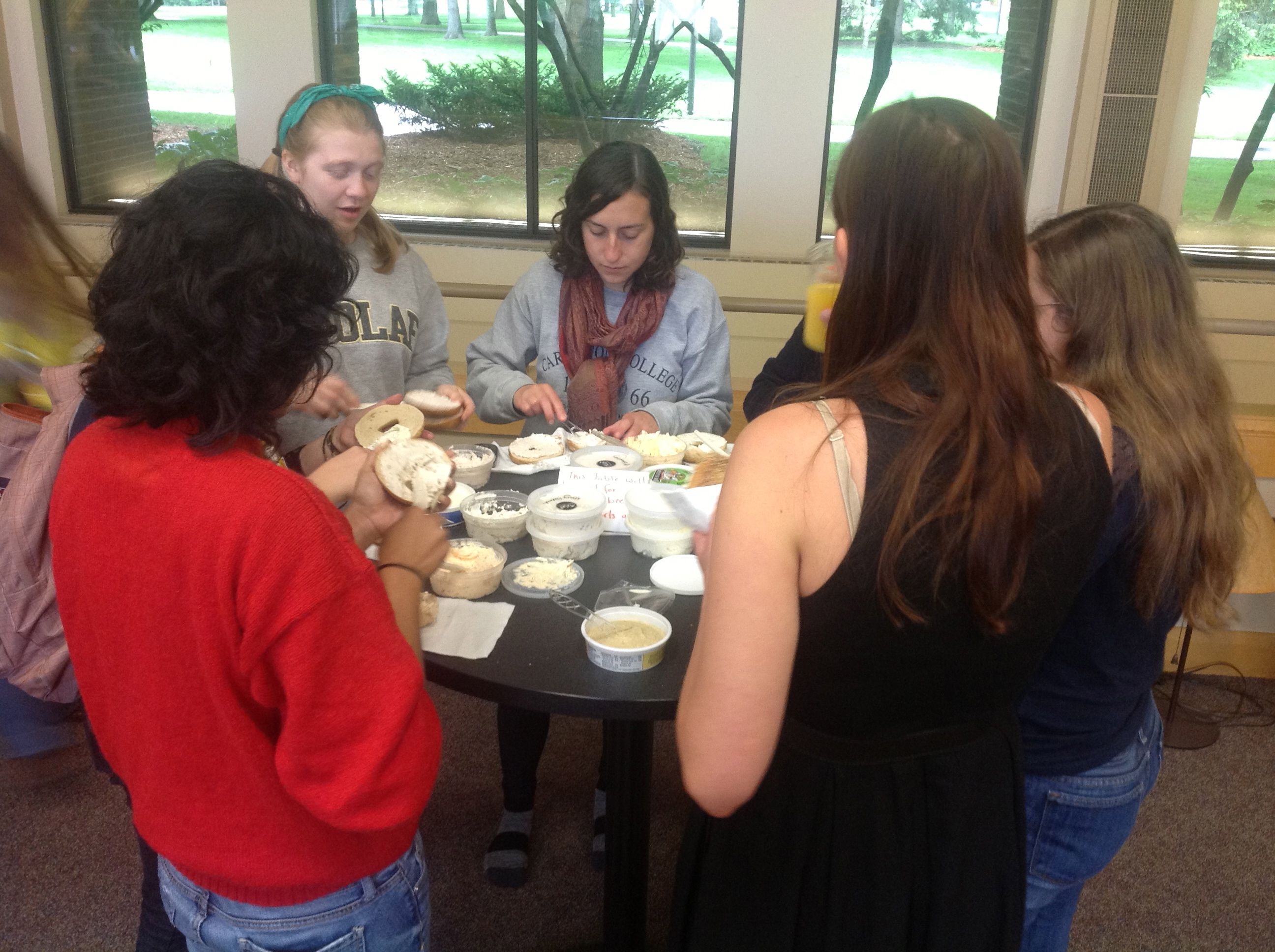
Several tables of cream cheese.
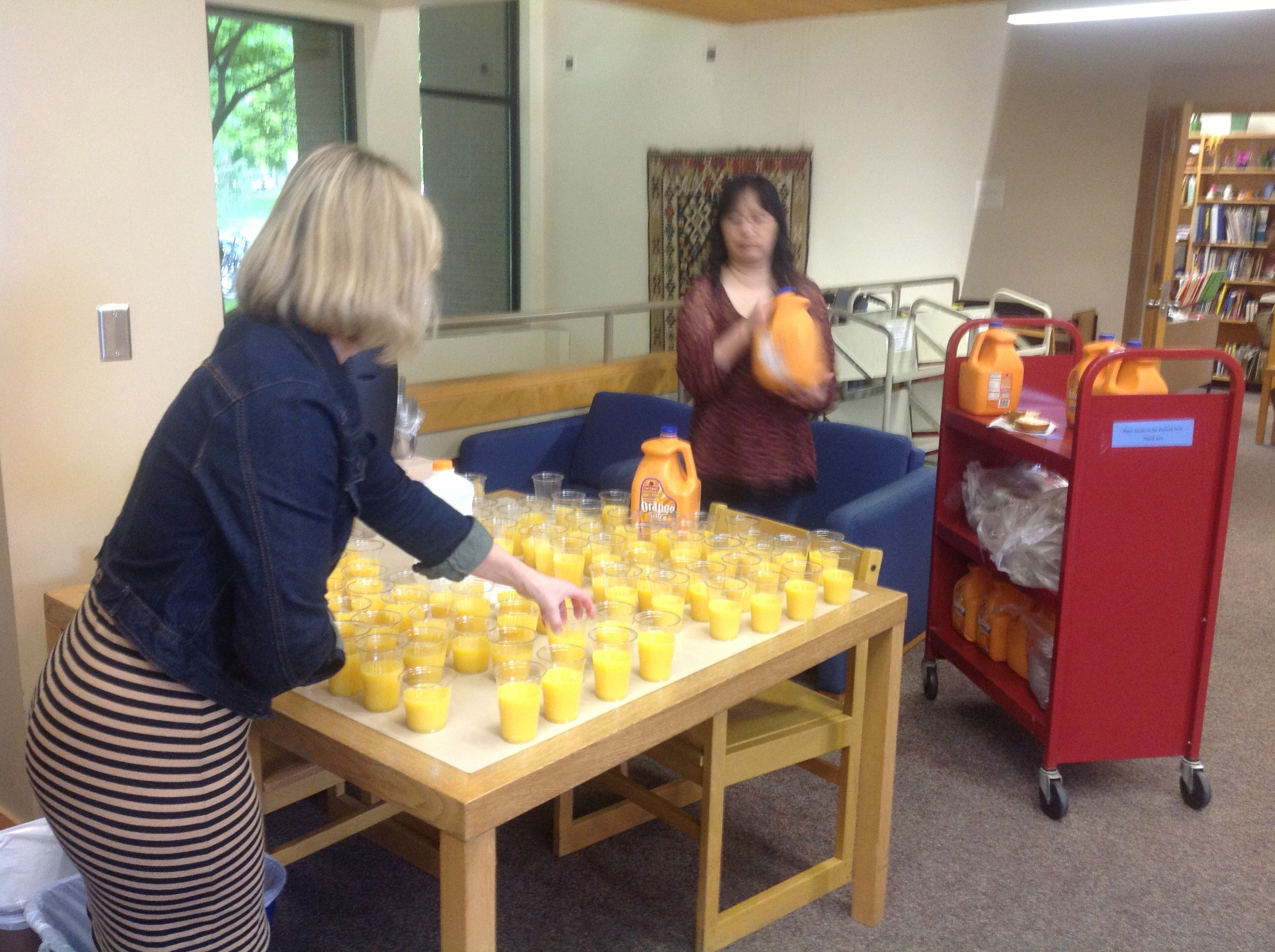
Gallons of orange juice.
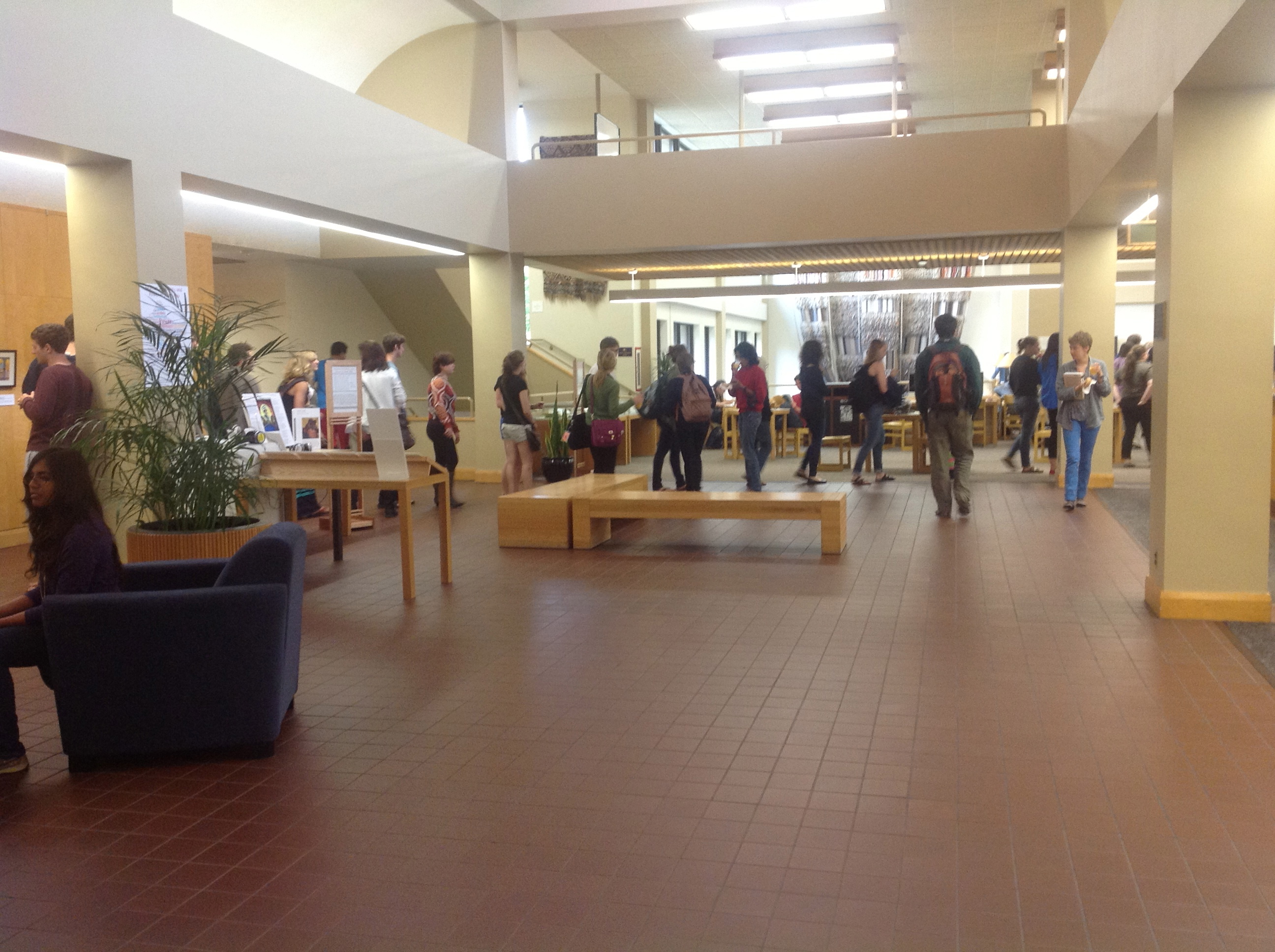
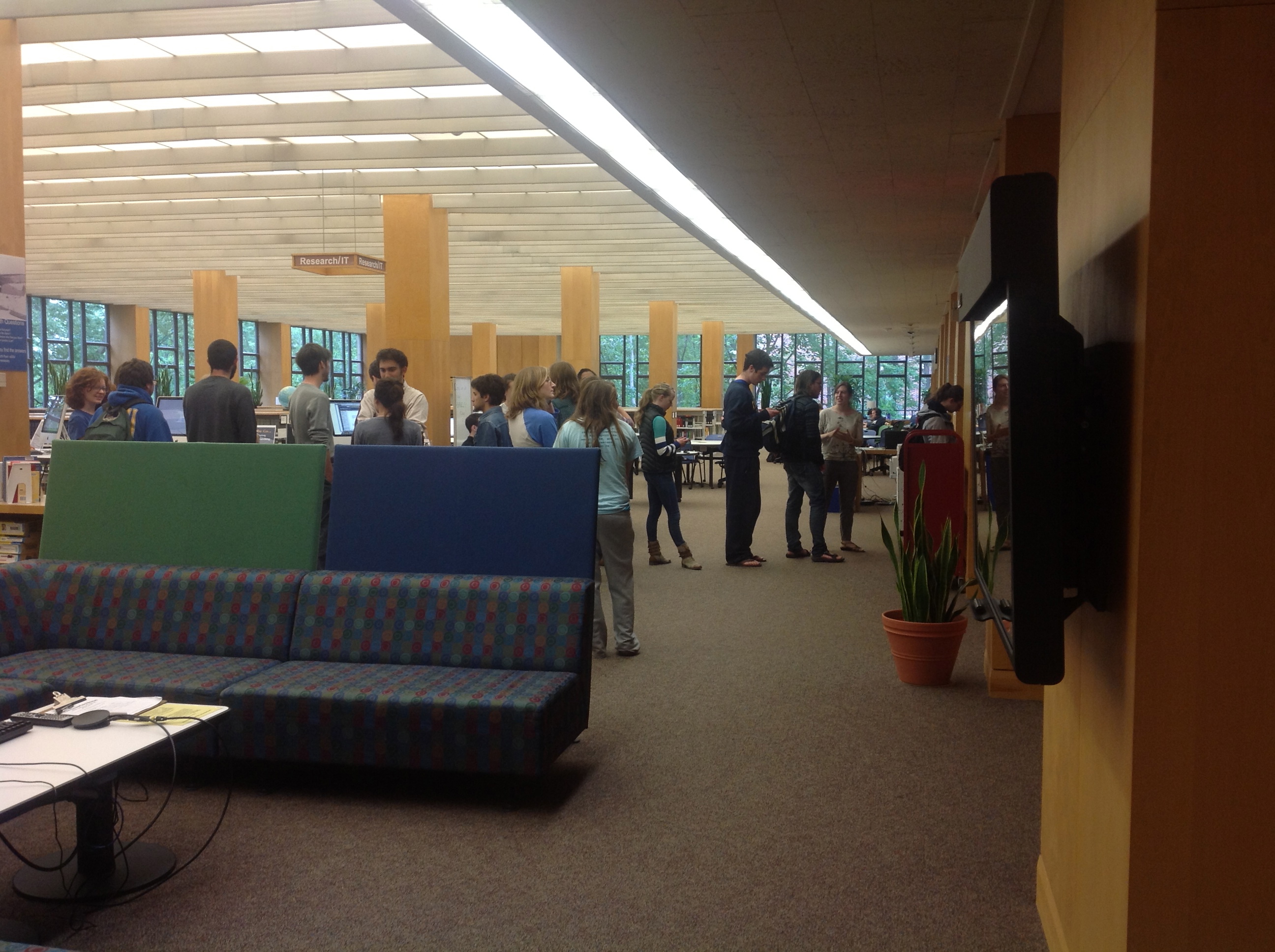
The line snakes all the way around the large study space called the East Wing and then out into the library's main lobby.
The line snakes all the way around the large study space called the East Wing and then out into the library’s main lobby.
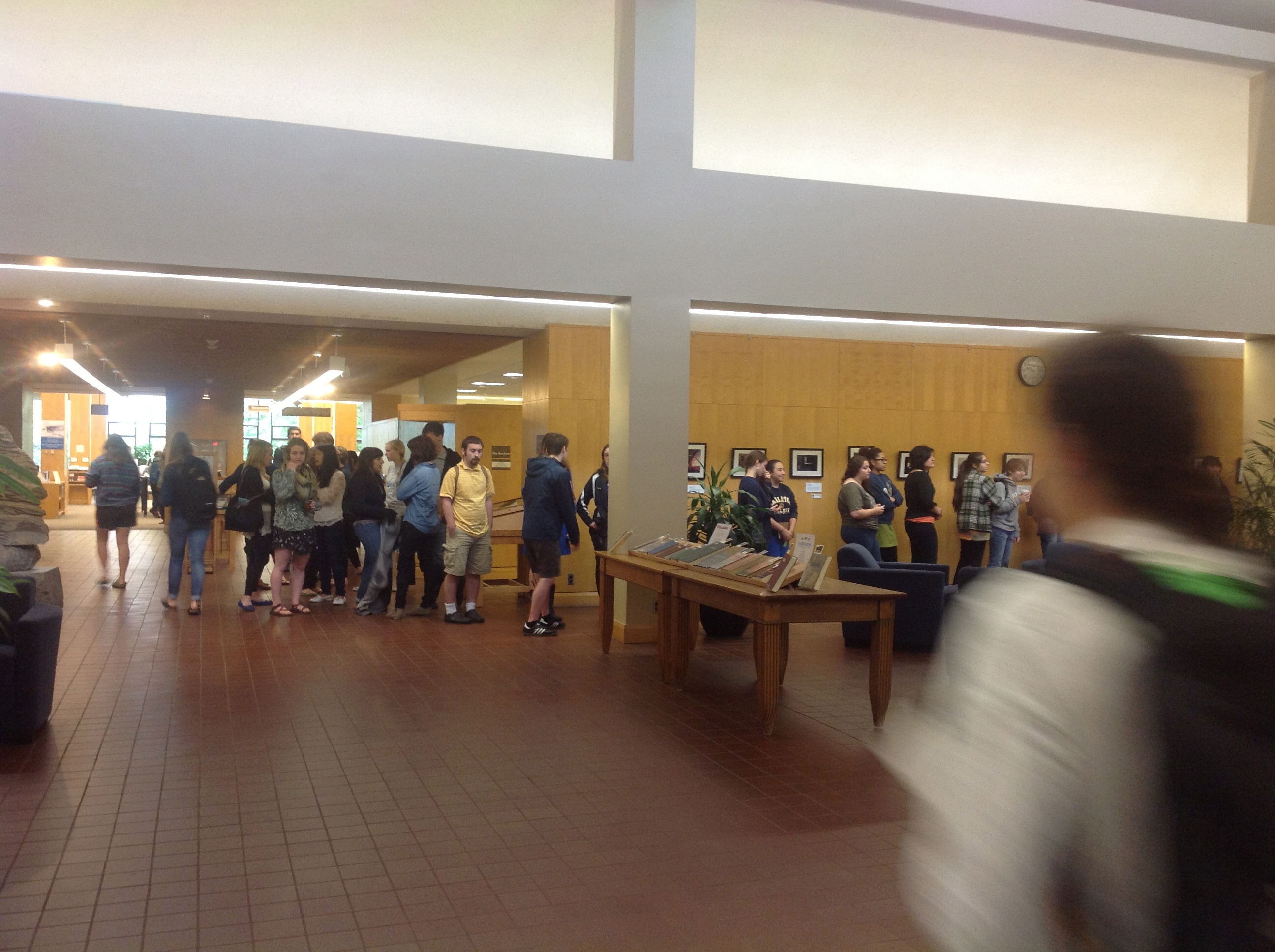
Then the line goes all the way across the lobby and down the main hallway to the reference room.
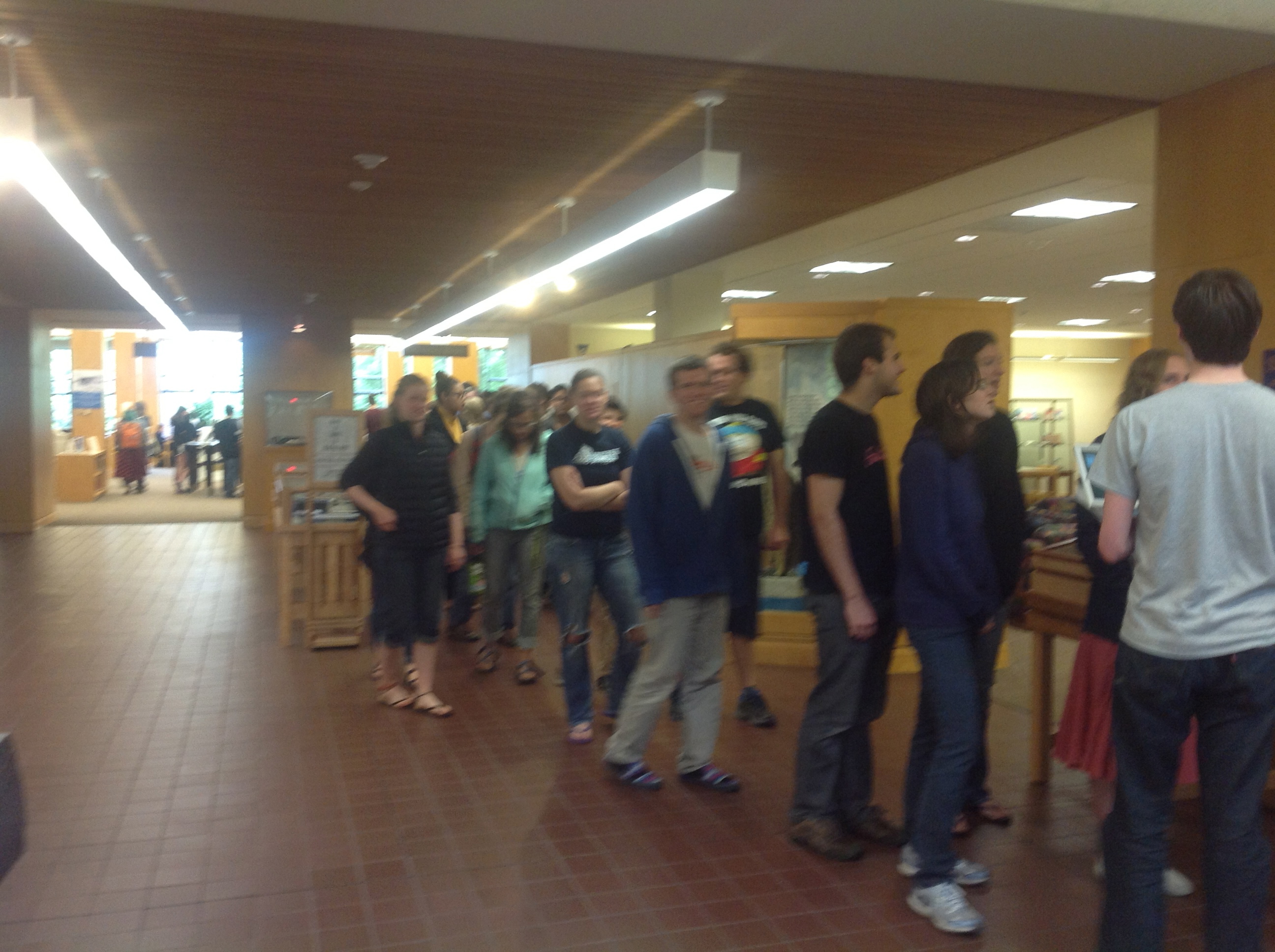
Did I mention there was a line?
Finally, the line ends after crossing the entire library in a massive Z shape, ending in the Reference Room.
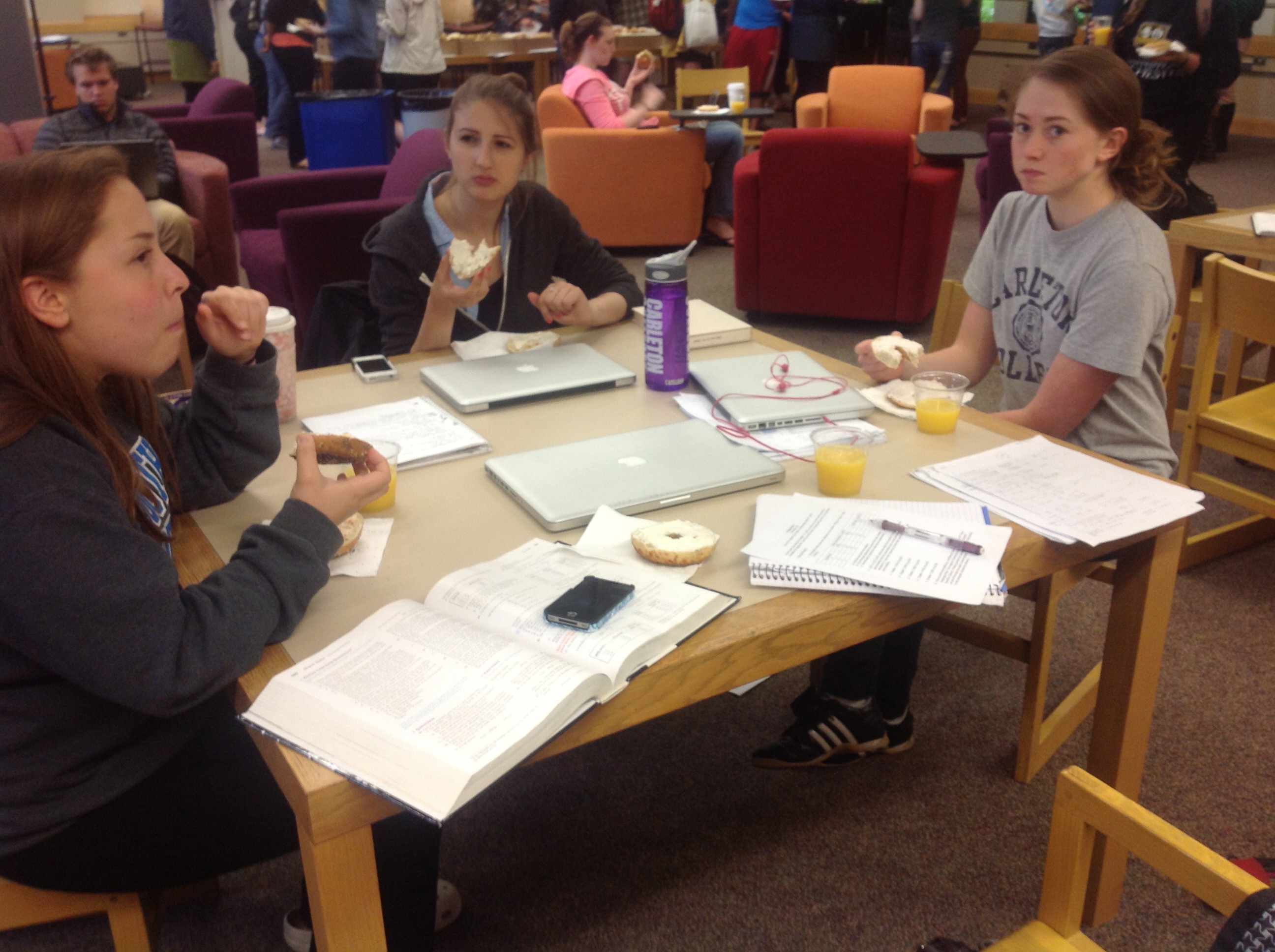
Studying in style.
Studying in style.
2 Comments
css.php