Skip to content

Category: Shameless Self-Promotion

Boats and Ferries and Bridges, Oh My!: Digital Humanities support models

This morning my coworker Sarah Calhoun and I presented again at the Oberlin Digital Scholarship conference, “Building a Distributed Collaborative Model for Digital Scholarship Support at Liberal Arts Institutions: A Mixed Metaphor Salad.” Our other co-presenter, Austin Mason, couldn’t make it to the session, but he gets the credit for finding and bringing to us the metaphor that drove the session. He’d attended a session by Liz Milewicz of Duke University and gotten permission to reuse her metaphor. And the metaphor in question? Various methods of crossing water from one shore to another. Here’s how we used it.

“Automobile crossing rope bridge. 1923.” Photograph made accessible by the Field Museum Library. http://www.flickr.com/photos/field_museum_library/4462494439/

On occasion, supporting the digital humanities can feel an awful lot like trying to drive a car across a rope bridge. Either the infrastructure is inadequate for the project, or the project chose the wrong infrastructure to use to get across the river.

In an attempt to avoid this unfortunately pairing of project and infrastructure as much as possible, we propose thinking carefully about the infrastructure we put into place, and also about how to communicate clearly with researchers and with ourselves. We want researchers to find and use the right resources for the job, and we want to prevent siloed services that may duplicate effort or cause turf wars. And one way to think through these issues is to map out what’s happening on your campus.

Most campuses will have brave DIY-ers, who cross the river in daring ways using found objects (fallen logs) or special skill/access (base jumpers). These are important parts of creative research on our campuses, but they are not very repeatable or scaleable. They are not a great plan for a support model.

"Simple cable ferry, Gee's Bend, Alabama, 1939" by Marion Post Wolcott.
“Simple cable ferry, Gee’s Bend, Alabama, 1939” by Marion Post Wolcott. https://en.wikipedia.org/wiki/Cable_ferry#/media/File:Marion_Post_Wolcott_- _Old_cable_ferry_between_Camden_and_Gees_Bend,_Alabama.jpg

One of the low-barrier, low-overhead, repeatable methods of crossing might be a rope ferry. These work quite well either solo or with a ferryman, but they may not be terribly stable over time. Perhaps various semi-ephemeral things like free blogs or social media fit here, where researchers can get information up online, but it may not be stable over time if the researcher or the service move in new directions.

"Venezia - Ferry-boat Lido di Venezia"
“Venezia – Ferry-boat Lido di Venezia” https://commons.wikimedia.org/wiki/File:Venezia_-_Ferry-boat_Lido_di_Venezia.jpg

Or perhaps there are more modern ferries available. These are larger, more powerful, and require less effort on the part of the researcher. Maybe something like an institutional subscription to Omeka or WordPress fit here. They were for a lot of people interested in doing a lot of different kinds of things, and support can be pretty standard on campus.

"Brooklyn Bridge Manhattan"
“Brooklyn Bridge Manhattan” https://commons.wikimedia.org/wiki/File:Brooklyn_Bridge_Manhattan.jpg

But if you have a ferry running the same route over and over and over, and if you also have some money and staff for new construction, maybe it’s time to build a bridge. Some schools, for example, have a whole unit or a Center dedicated to supporting digital humanities. Some of these Centers are even iconic, like the Brooklyn Bridge. And I think that depending on the school, a massive, multi-lane bridge with tons of on-ramps and off-ramps might be a wonderful thing.

However, bridges really do require upkeep, they can become bottlenecks, they often have height and weight restrictions, and they may not serve all needs. Researchers are creative beings who may need to start in a different spot, end in a different spot, or get across in unusual ways. So at this point it becomes a matter of project portfolio management.
Vinopal, Jennifer, and Monica McCormick. 'Supporting Digital Scholarship in Research Libraries: Scalability and Sustainability.' Journal of Library Administration 53, no.1 (January 1, 2013): 27-42. doi:10.1080/01930826.2013.756689.
Vinopal, Jennifer, and Monica McCormick. ‘Supporting Digital Scholarship
in Research Libraries: Scalability and Sustainability.’ Journal of
Library Administration 53, no.1 (January 1, 2013): 27-42. doi:10.1080/01930826.2013.756689.

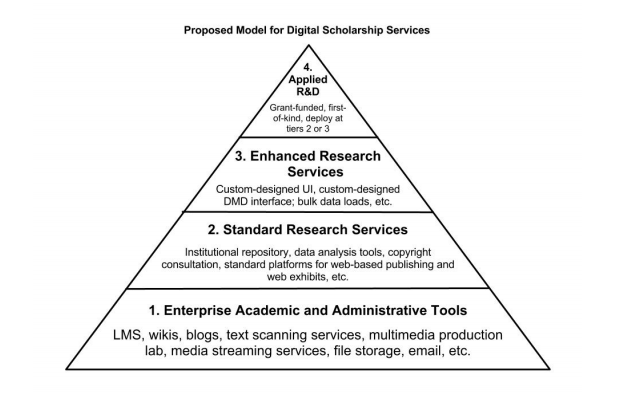
Jennifer Vinopal (who was also this conference’s keynote speaker, though we’d planned to site her even before we knew that), and her colleague Monica McCormick wrote a fantastic piece on “Supporting Digital Scholarship  in Research Libraries: Scalability and Sustainability” in the Journal of Library Administration. In it they recommend having an infrastructure such that the majority of project can use standardized tools that are well-supported on campus. Then allow for creativity by building in support for projects that can mostly use those standard tools but with some standardized consultation services, or with a bit of custom tweaking. But reserve some capacity for a few truly custom projects that will require a lot of support (and try to make sure that these project can be “first of a kind” rather than truly one-off projects).  So perhaps you have a couple of docks for some ferries not far from your bridge, or a landing area for your base jumpers, but there’s communication and vetting involved in committing resources to these special projects.

And no matter your solution, close communication between support and coordination folks will prevent boating collisions, or the building of duplicate bridges. To mix metaphors quite wildly, at Carleton we think of our coordinating folks as a three-legged stool: Library, Humanities Center, and Academic Technology. Representatives from these areas try to make sure that things move forward in a coordinated fashion even when the actual support and work of digital scholarship happens in all kinds of places on campus. We’re calling it a “coordinated distributed model,” and it is still in its infancy. We are currently tackling the question of what infrastructure to build and for whom, which tools will be our standard and which will we cut loose, who will be involved and to what extent, and how will we make sure that people who need us will find us?

Exploring these questions, we handed out blank maps to participants and asked them to depict their campus’ current models, talking in small groups about how things work on their campuses, and comparing with others to find trends and themes.

Feel free to use or make your own. I just drew this sketch of a map on my iPad.
Feel free to use this map or make your own. I just drew this sketch of a map on my iPad. https://drive.google.com/a/carleton.edu/file/d/0B1hW_xoemoVvSklzYmJTNnFzWTA/view

One fascinating thing was that there were three participants from one college, and all three drew different maps. Others drew people drowning in the river, or people standing on one shore and gazing longingly at the distant shore. But one thing that became clear was that whatever infrastructure an institution adopts, it has to fit the local context. There’s no sense sinking a ton of money in a massive bridge if there’s no demand, or just because another school did it. And on the other hand there’s no sense leaving researchers to fend for themselves on campuses where lots of people have a similar need.

Then we handed out new blank maps and asked participants to think about an ideal infrastructure for their campuses over the next 5-ish years. There were so many interesting and useful responses. One person drew a crew of happy inner-tubers (beer implied), and someone at a different table drew one big inner tube. Most had more than one method of getting across. Others had thought about setting up villages or resorts on one side or the other to show the community that would be important, or close communication, or the bringing together of units that are currently separate. The creativity and thoughtfulness in the room was so inspiring!

At the end we asked participants what one thing they wanted to take back or change first at their institutions. My own answer was that I want to hand out blank maps to the people I work with on campus and see what we each think the current model looks like, and where we each hope it might go.

Leave a Comment
Emergency Planning For Safe Learning Environments – ACRL 2015 – Links and Handouts

As I mentioned before, my coworker Kristin and I presented a workshop at ACRL 2015 on emergency planning for libraries. The idea was that there are all kinds of things that libraries or individual groups within libraries can do to be more prepared for disruptive circumstances, many of them are even very simple.

The workshop proved to be an action-packed 3 hours featuring a cast of wonderful participants. I learned a lot, and I hope they each came away with something useful. If you want to see our materials, we shared all of our handouts here http://bit.ly/1E7Sl7L including example copies of an emergency plan and a set of scenarios to use if you’d like to conduct a lively and informative exercise with your colleagues.

Happy planning!

Leave a Comment

Heading to ACRL to Give an Unexpected Workshop

So, you know me. I think a lot about information literacy, instruction, sometimes technology, sometimes copyright… So I’m not presenting a workshop on any of those things at ACRL. Nope, I’m presenting with one of my colleagues (the wonderful Kristin Partlo) on the topic of emergency planning.

“But tornadoes and active shooter incidents in libraries have so little to do with library instruction,” you say. And not too long ago I would have totally agreed with you. But it turns out that there’s just a whole ton of overlap between customer service, instruction, and emergency planning.

The workshop still has some openings (as of the moment I pushed publish), if you want you can still join us in what I promise will not be a terrifying presentation about all the ways you can die unexpectedly. Really, I swear. It’s actually going to be pretty action packed and cheerful and extremely practical even if you’re not The Person In Charge of Emergencies at your library. So join us!

Here’s the official blurb:

Emergency Planning for Safe Learning Environments: Simple, Sustainable Solutions for Complex Times

Our libraries are high-traffic, public spaces that are vulnerable to many kinds of threats, but planning for emergencies does not have to be onerous or unpleasant or done only by administrators. Come design a practical plan to initiate and carry out workplace safety discussions at your library, identify stakeholders in your community, and implement simple but effective measures to guard your own safety and that of your user community.


3 Comments

Information Literacy sessions at the Minnesota Library Association

As I mentioned earlier, last week was a busy one in part because I was busy presenting at the Minnesota Library Association’s annual conference last week. It was a blast! The audiences were participatory and I learned a lot from my co-presenters in each presentation. What fun.

“The ACRL Framework for Information Literacy: What does it mean for instruction librarians?”

Presented by Iris Jastram (Carleton), Jason Paul (St. Olaf), and Rachel Weiss (Augustana), this presentation updated instruction librarians on the new (draft) Framework for Information Literacy from ACRL.

“Studying the Second Year: College Sophomores, Research Behavior, and Information Communication.”

Presented by Anna Hulseberg (Gustavus), Iris Jastram (Carleton), Heather Tompkins (Carleton), and Michelle Twait (Gustavus). this presentation combined Carleton’s Information Literacy in Student Writing project with Gustavus’ mixed methods study of sophomore research practices.

Leave a Comment

Call Me Ms. Information Literacy: Two Sessions at the Minnesota Library Association this Week

As it turns out, I’ll be presenting at MLA not once but twice this week, so if you’re headed there be sure to stop by and say hi!

First I’ll be part of a panel with Jason Paul of St. Olaf and Rachel Weiss of Augustana entitled “The ACRL Framework for Information Literacy: What Does It Mean for Instruction Librarians?” We’ll talk about weaving together your institution’s mission and the new (still draft) Framework for Information Literacy to create elements in your library sessions that move students toward greater competence with the core concepts of the Framework.

Then I’ll do a quick change and present with my colleague Heather Tompkins and with two colleagues from Gustavus, Anna Hulseberg and Michelle Twait, on a session entitled “Studying the Second Year: College Sophomores, Research Behavior, and Information Communication.” The Gustavus librarians have done some fascinating research into the behaviors of sophomores who are preparing research projects, and Heather and I have been part of our library’s Information Literacy in Student Writing (based off of sophomore writing). Put the two together and we suddenly know quite a lot about sophomore skills and habits when it comes to research.

Leave a Comment

Situating Information Literacy Within the Curriculum: Using a Rubric to Shape a Program

For the past 5 years my department in the library at Carleton College have developed and engaged in an ongoing assessment project, the Information Literacy in Student Writing (ILSW) project. We published a piece in In The Library With The Lead Pipe in 2011, and this month Portal published our second article on the topic,  “Situating Information Literacy Within the Curriculum: Using a Rubric to Shape a Program.”

Danya, Heather, and I asked for and signed a license with Portal that allowed us to keep ownership of our copyrights, so I’m able to provide the full text of that article, but you should definitely take a look at the rest of the issue. I happen to know that Catherine Pellegrino also has an interesting article in this issue, for example.

Jastram, Iris, Danya Leebaw, and Heather Tompkins. “Situating Information Literacy Within the Curriculum: Using a Rubric to Shape a Program.” Portal Libraries and the Academy 14, no. 2 (2014): 165–86.

Abstract: This article reports on a pilot study to examine undergraduate students’ help-seeking behavior when undertaking library research in online courses. A novel methodology incorporating elements of ethnographic research resulted in a small, but rich and detailed, collection of qualitative data. The data suggest that the methodology has promise for future, larger studies on students in online learning environments. The article includes a detailed discussion of the methodology’s strengths and weaknesses, and offers recommendations for modifications that will improve the research design.

I should note that I’m the first author only by virtue of the alphabet. This was truly a group effort.

Please note: all figures are out of place by one position.


2 Comments

Locations of Literacy: Information Literacy (plenary panel at MnWE 2014)

Yesterday I was honored to be invited to join the opening plenary panel at the Minnesota Writers and English conference. The panel was on the theme of Locations of Literacy, and the other panelists discussed Cultural Literacy, Civic Literacy, and Environmental Literacy. I, of course, talked about Information Literacy. Here is a close approximation of the talk I gave.

MnWE
I drew the slides in the iPad app Paper by 53.

Before I get started, I just have to say that back when I was a writing center tutor myself, I never anticipated a time when I would address a room full of Writing and English folks, let alone speak on a topic as seemingly dry and boring as information literacy. And if you’d told me then that my favorite classes to teach would be on the epistemological and rhetorical underpinnings of citation styles… well, let’s just say that would have seemed too ridiculous to even warrant a laugh. But here I am; life is weird.

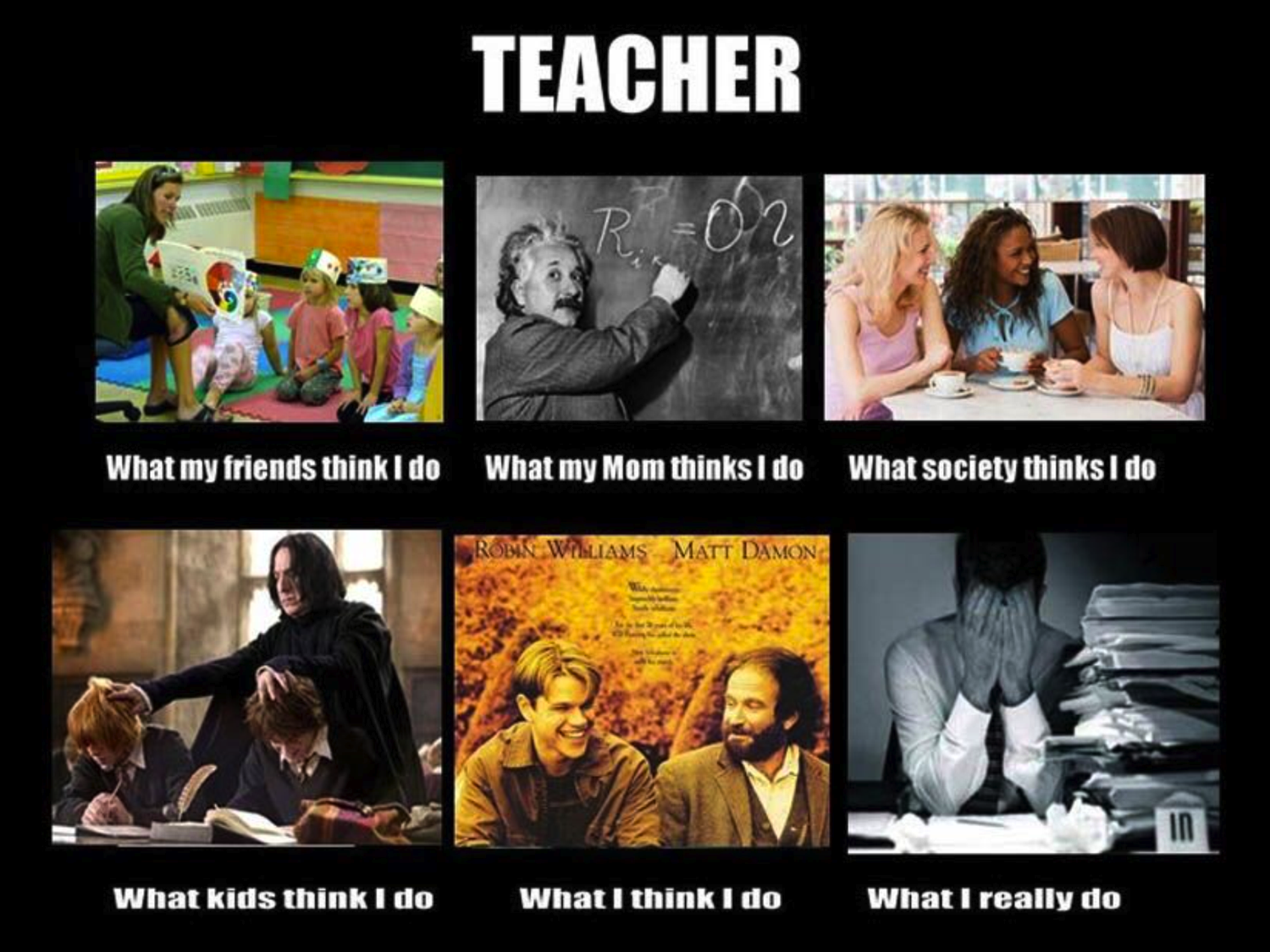
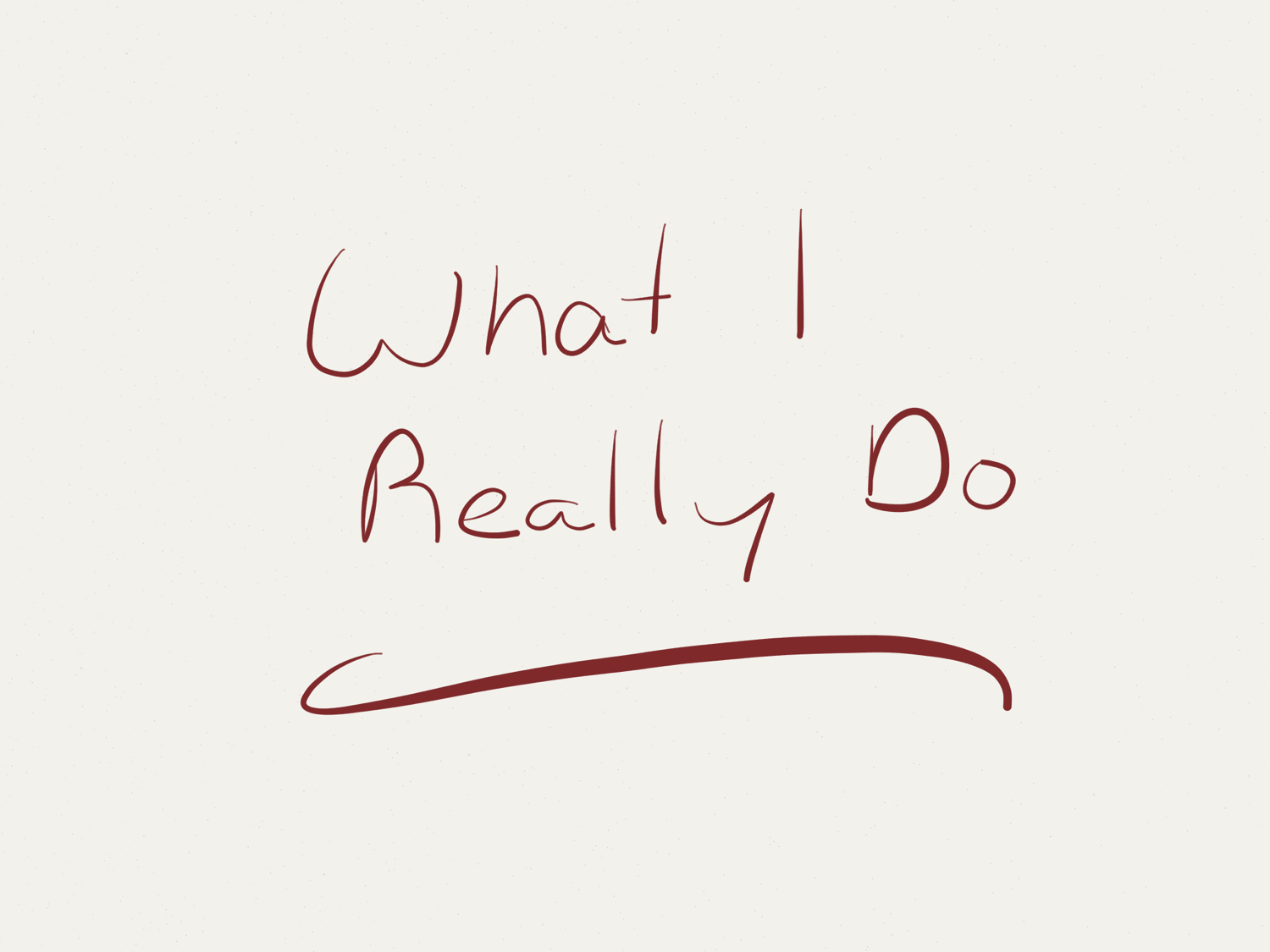
Anyway, do you remember that meme that was going around a couple of years ago? “What my mom thinks I do… what my kids think I do… what I think I do… I what I really do?” Here is one that resonated for me. Who hasn’t wanted to be that teacher from Good Will Hunting? And of course we all spend a lot of time looking like the poor teacher in that last panel.

Meme
http://teachersol.blogspot.com/2012/02/what-others-think-we-do.html

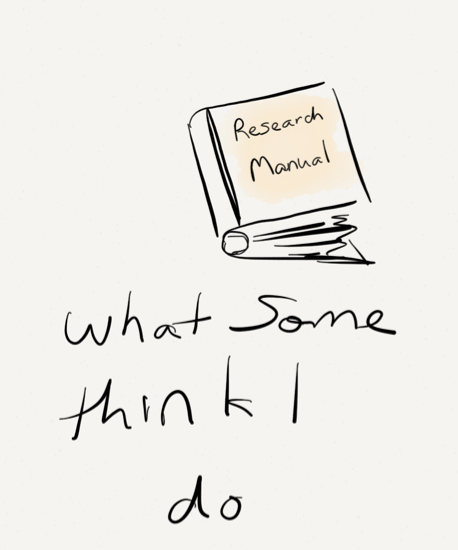
manualFishAs an instruction librarian, here’s what lots of people think I do, even other librarians: walk students through the Manual of Research Procedures. “Could you work this phrase or that module into all your instruction sessions?” Or “What do you tell all your students about how this or that back-end system works?” In this manual, if you turn to page 43 you’ll find Boolean operators, page 65 is Interlibrary Loan Policies and Procedures, and page 682 is on JSTOR options and techniques. If this really were my job I would be so bored, and a bored teacher is a bad teacher, so I’m really glad that this is not my job.
Another thing I get a lot is this is people thinking that we’re in the business of handing out answers. We’re all about teaching students to fish — helping them come up with strategies to use and resources to explore.

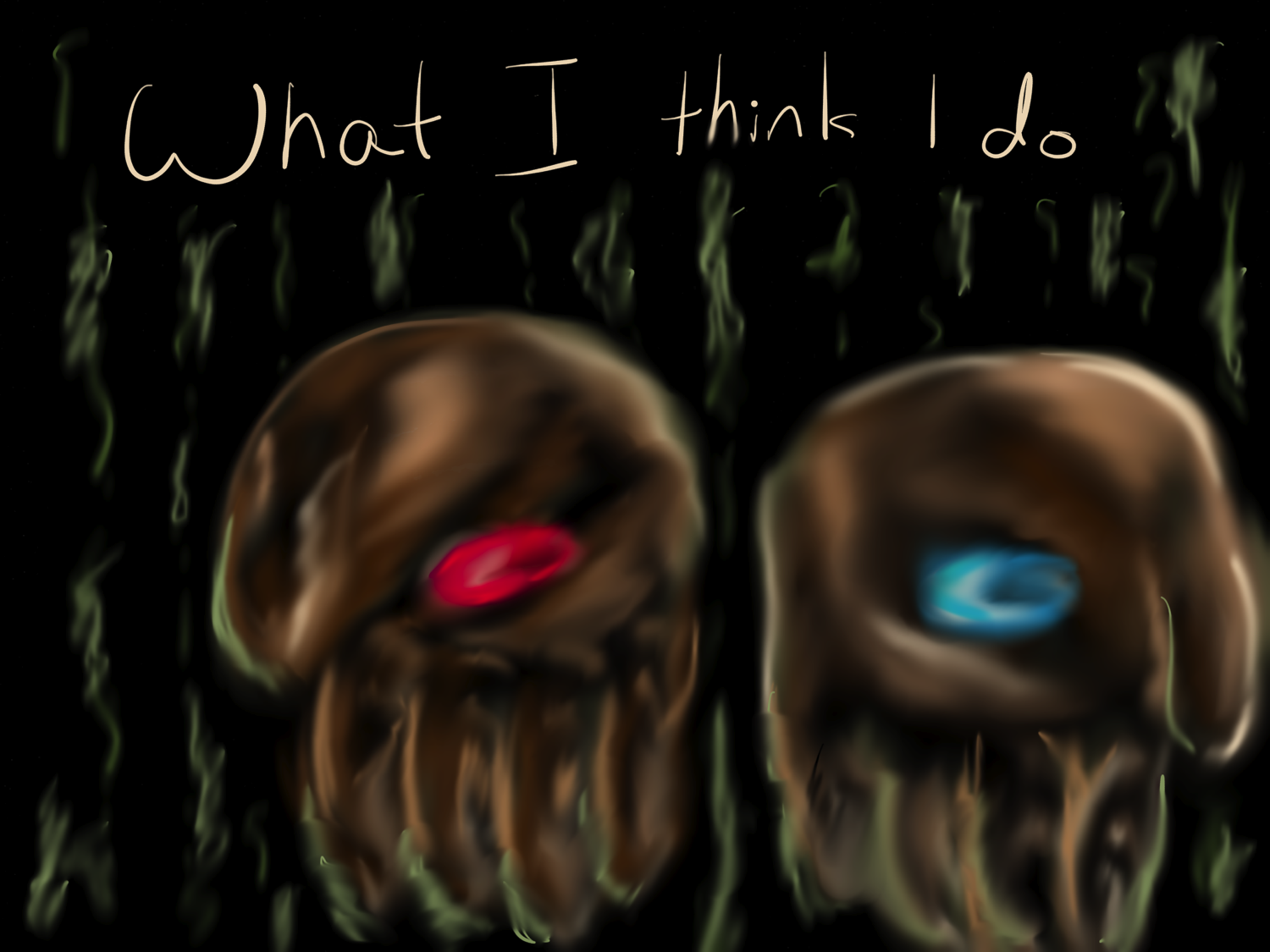
So what I think I do? I have this rather grand vision of myself as Morpheus from the Matrix. “Here, students, are two pills. Take the Red Pill and your life will never be the same again, the world of information will look fundamentally different, and there will be no turning back. Take the Blue Pill and you’ll probably pass your term paper.”


Morpheus

ReallyDoSo what do I really do? What I really do is teach principles and skills associated with information literacy, and I create and advocate for experiences in which my students can strengthen their information literacy habits of mind. (I couldn’t figure out how to draw that.)

So what is this “information literacy” thing that I’m teaching and advocating for? Well, first, it’s something that we’re all in the business of teaching – it’s just that I make it my focus. And it is located in the spaces between information.

But what does this mean?

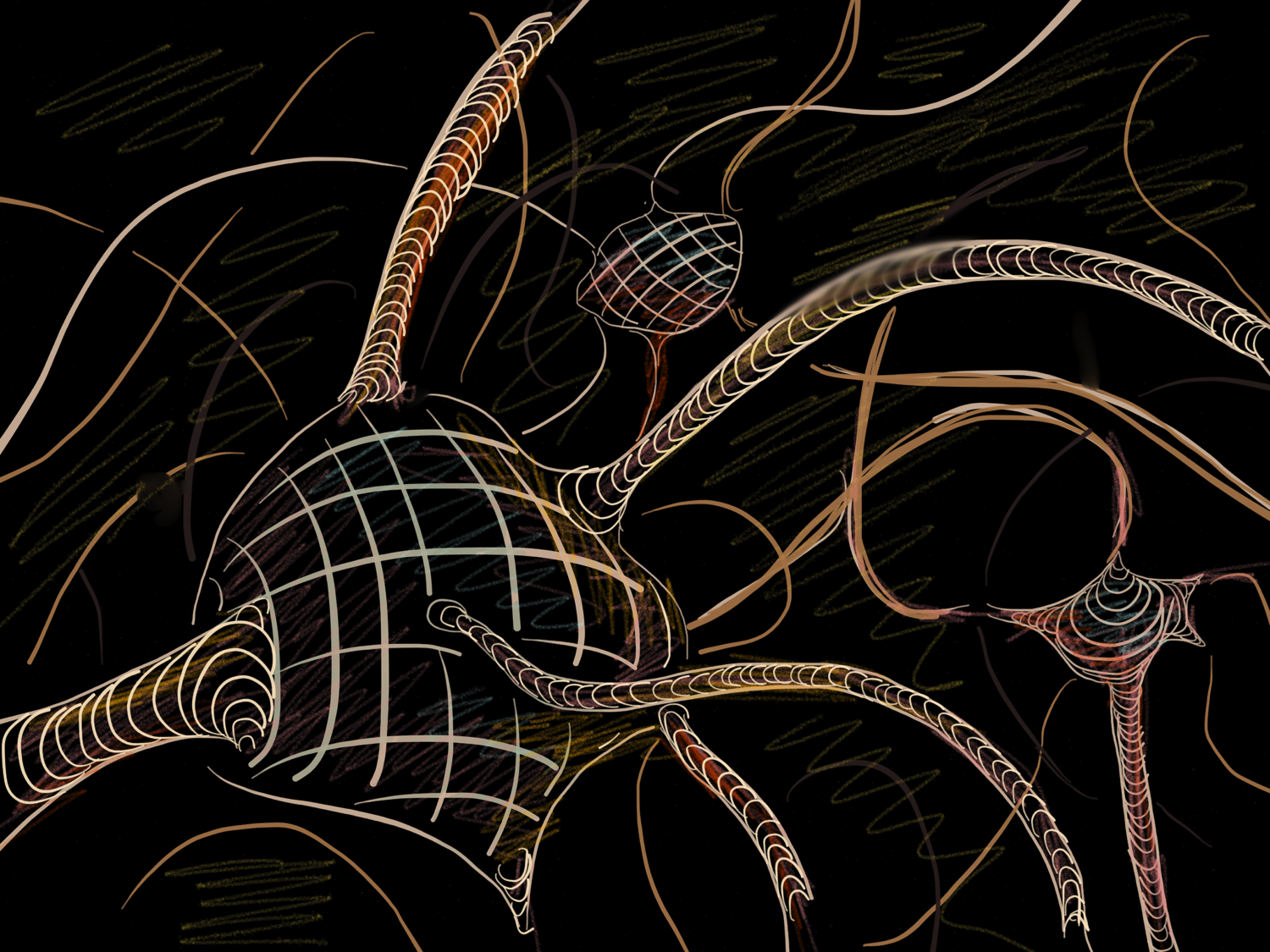
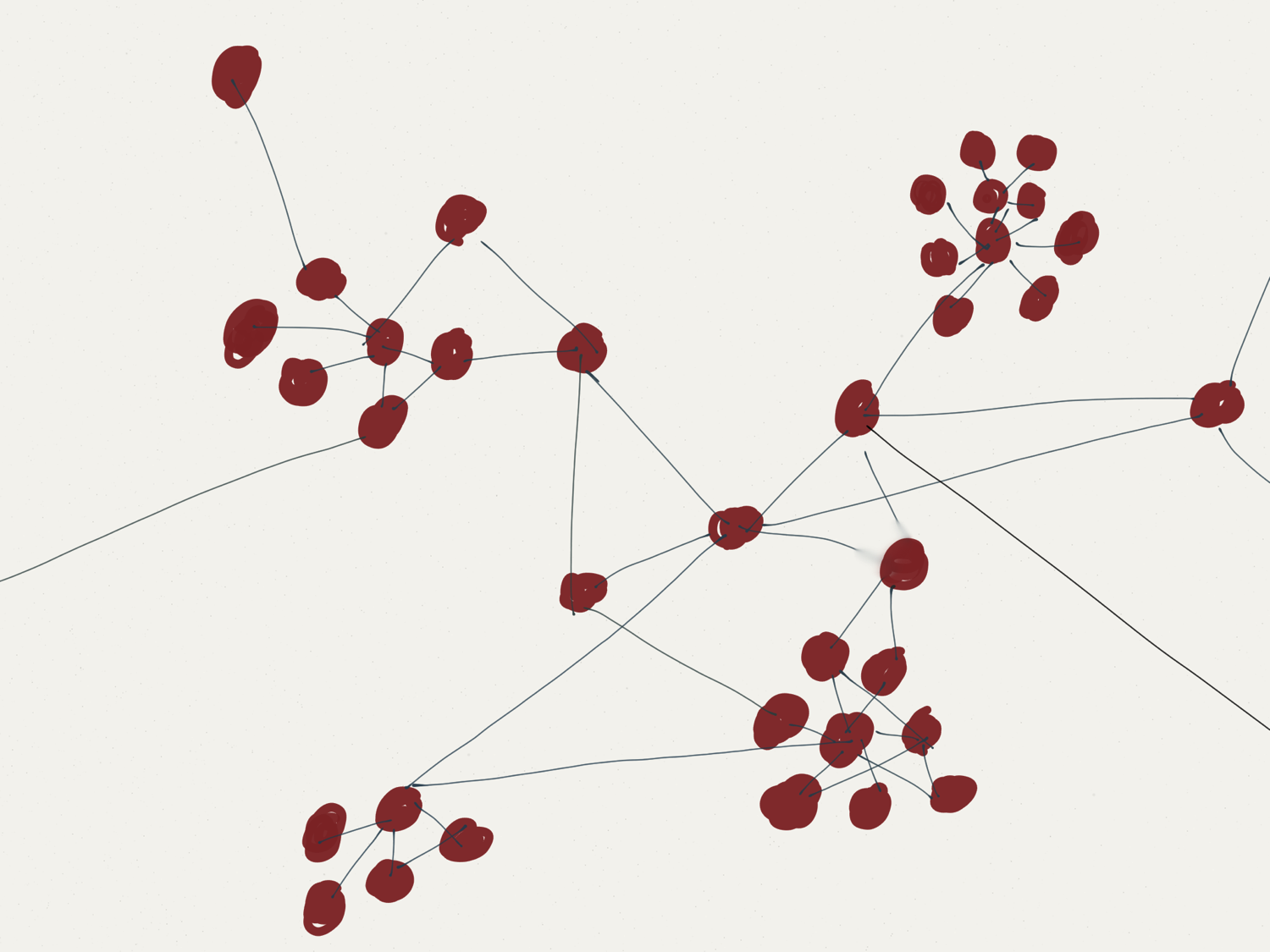
Think of a neural network.

Neurons

The neuron itself is fascinating, and I’m sure there’s someone somewhere out there who is making a single neuron his life’s work. But this wonderful neuron is nothing without its connections to other neurons in the context of a nervous system. It can fire and fire to its heart’s content, but if it’s the only neuron firing in this system, or if none of the other neurons are cooperating with each other, you’ve still got a dead body. No, it’s the cooperative, dynamic negotiation of signal and noise, impulse and understanding that animates the body. Just so, it is the discursive interplay between the information itself, the community’s values and practices, and effective participation in context-appropriate conversation — THAT is where information literacy sparks to life.

ThingsHere’s another way to think of it. Too often we concentrate on the books, articles, images, and other items — the stuff of research. Gather that stuff, cite it properly, don’t plagiarize, and you’ve got a research project! We have all seen those papers. “Here’s everything I know about x.” Or “here are a bunch of good sounding quotes that I like in this particular order.” But seeing research that way is not information literacy. The student may have arrived at these communicational non-entities using perfectly constructed, Boolean-laced search strings in exactly the right databases. The student may have evaluated that information beautifully and chosen exactly the right articles and books to cite perfectly in these papers. But this is not information literacy — neither you nor I am happy with this outcome (a point that Barbara Fister, whom many of you may know, made decades before I thought I arrived at it on my own, by the way, in her article “Teaching the Rhetorical Dimensions of Research.”) These techniques for finding and evaluating are the grammar, spelling, and punctuation of my profession: very important, for sure, but not sufficient.

NetworkNo, information literacy is about negotiating understanding within a context. It means being able to map out the community of inquiry and the various conversations that community is having. And then, it means being able to show that community where new knowledge fits. Parroting back other people’s conversations is not an effective conversation tactic in real life, right, so why should it work here? This is where you get to expand the conversation in very real terms.

But even this mapping is not yet enough. It helps us see the social and relational aspect of information literacy, but it doesn’t highlight the very real importance of the local culture of these conversations.

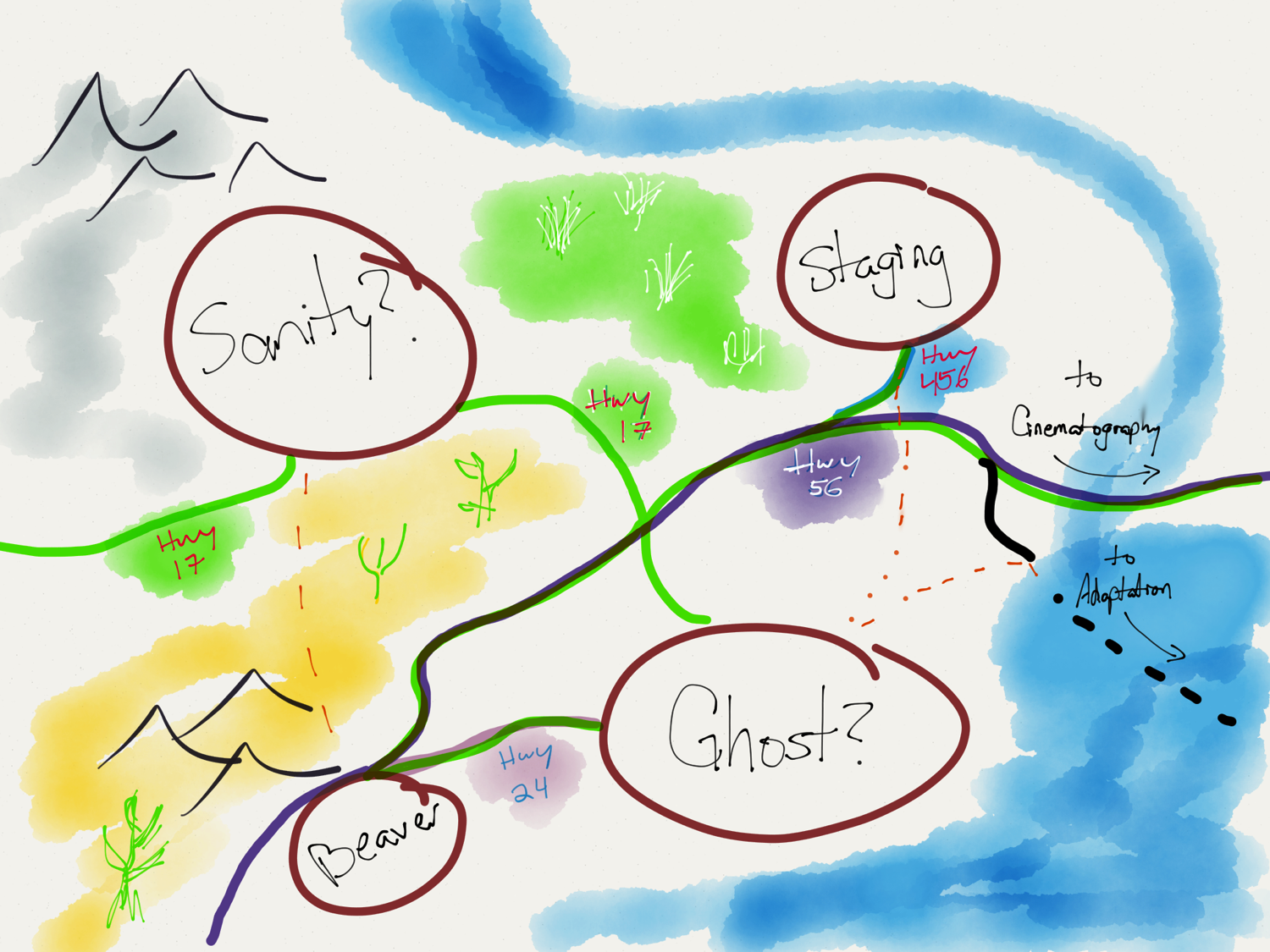
Here is a small section of the Continent Of Hamlet Studies.
Map
Each city-state within this content has its own laws, customs, and even language. So an effective participant in the city-state of Hamelt’s Sanity has to know things like what counts as evidence here? What are the rhetorical moves that matter here? Who are the important interlocutors? What is the vocabulary here? (And yes, the vocabulary matters to information literacy on many levels, not least because when you’re searching, computers can’t read. Computers only match letters in a row, and if you don’t use the letters-in-a-row that the rest of your community is using, you won’t be able to find what they’ve said.)

As Annemarie Lloyd says in her wonderful book, Information Literacy Landscapes, that information literacy is “the product of negotiated construction between individuals” (12). She says these individuals are “interacting with the artifacts, texts, symbols, actions and in consort with the other people in [given] context” (12). She calls this a “socially discursive practice” (15). You see why I think writing and information literacy go so well together?

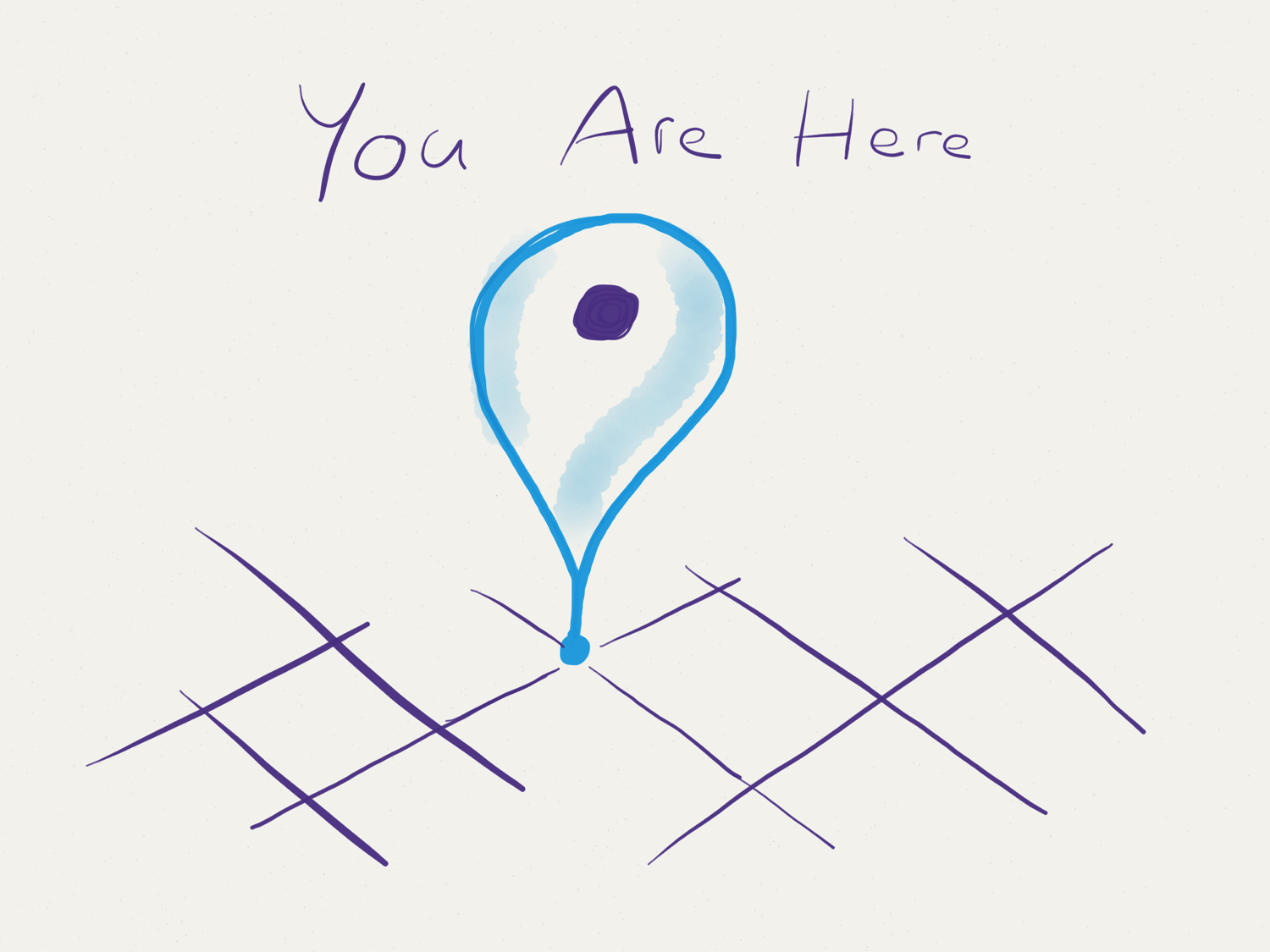
YouAreHereSo where is this literacy located? It is inextricably intertwined with communication. It is, as Rolf Norgaard says in his article “Writing Information Literacy,” “an inventional resource for the writing student, not merely a resources for supporting what has already been invented” (129). And it exists in the vital and dynamic connections between information and people.

So let’s all encourage our students to take the Red Pill. It’s a whole lot more fun.


——


Angala, Maria. “What others think we do #teachers #edchat [image].” Teacher Sol (blog). 19 February 2012. http://teachersol.blogspot.com/2012/02/what-others-think-we-do.html

Fister, Barbara. “Teaching the Rhetorical Dimensions of Research.” Research Strategies 11, no. 4 (1993): 211–19.

Lloyd, Annemaree. Information Literacy Landscapes: Information Literacy in Education, Workplace, and Everyday Contexts. Oxford: Chandos Publishing, 2010.

Norgaard, Rolf. “Writing Information Literacy: Contributions to a Concept.” Reference and User Services Quarterly 43, no. 2 (2003): 124–30.

5 Comments

Joining the Journal of Creative Library Practice

JCLPAnother year, another adventure. This year I’m honored, excited, and a little nervous to be trying my hand at editing a journal!

Joe Kraus recently invited me to join the editorial board of the Journal of Creative Library Practice. As soon as I saw the short list of wonderful librarians editing the journal, I knew I wanted to hang out with them and see what this young journal will become.

I know there are wonderfully creative librarians who read this blog — I’ve learned a lot from the comments and emails I get from you. So if you’ve got an article that highlights an interesting practice or solves a problem in an interesting way, drop us a line or submit a manuscript! Here are the instructions for authors.

Leave a Comment

We’re Published! “Swimming the Matrix: A Dialogue on Teaching Undergraduate Research”

Danielle Theiss and Kiane Kovacs have edited and published a book inspired by the work and writings of Barbara Fister, one of the librarians I most respect in the profession for her complex thinking, clear writing, and general all around amazingness as a person.

The book itself has chapters of all kinds, each of which is inspired by the three main areas of Barbara’s public voice: Change and Academic Librarians, Student Learning and Research, and Publishing and the Academic Library. And one of those chapters is a dialogue that Steve and I had about working effectively with undergraduates. It’s decidedly not  your average library science essay, and it was awfully fun to do. We hope you’ll enjoy reading as much as we enjoyed writing it!

Jastram, Iris, and Steve Lawson. 2013. “Swimming in the Matrix: A Dialogue on Teaching Undergraduate Research.” In Finding a Public Voice: Barbara Fister as a Case Study, edited by Danielle Theiss and Diane Kovacs, 69–84. Chicago: ACRL.


p.s. Kudos to ACRL for their fabulous author agreements.

2 Comments

USE-MAN! Copyright Basics for Academic Contexts

[A couple months ago I was asked to give a very brief overview of the use of copyrighted materials in teaching and research. The audience was faculty, staff, and students interested in the digital humanities, and I was the first in a panel of presenters who later covered finding reusable works and ownership of your own copyrighted material, work for hire, and student ownership of their own creative work. The day was a very informal one, replete with interruptions and digressions, but here is the gist.]

You, the cheerfully yellow user of information, are on a quest. You want to use somebody else’s work in the course of your teaching and research. You are Use-Man.*

UseMan

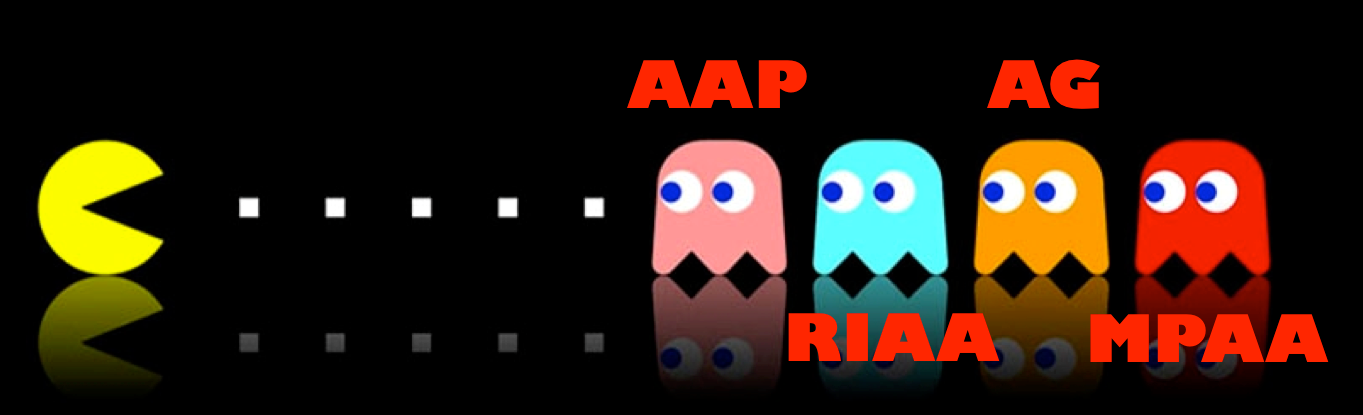
Bad GuysThis sounds relatively straightforward, but just as you get started, out pop the Bad Guys. These eager lawyers at the Association of American Publishers, the Recording Industry Association of America, the Author’s Guild, the Motion Picture Association of America and their ilk are charged with thwarting you at every turn. Their jobs are to help their associations make money, which means that they don’t want anyone copying their materials and (heaven forbid) make it so anyone could get at any of it without paying for the privilege.

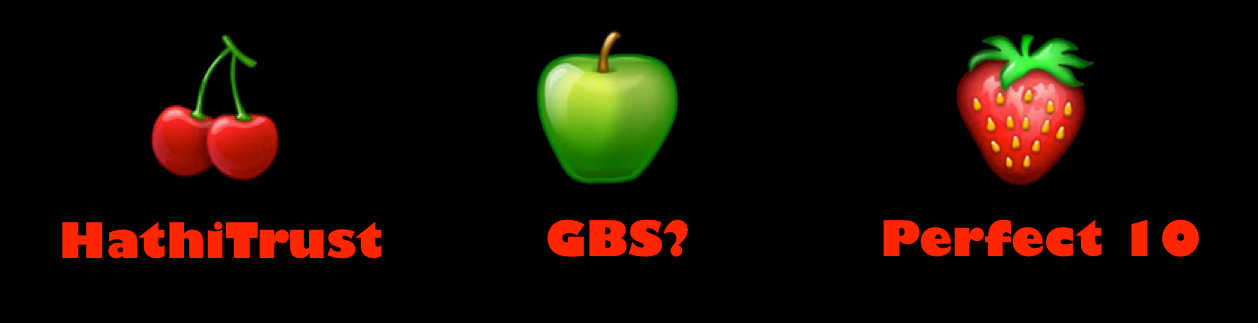
Power UpsAs you’re trying not to fall prey to the wily and over-protective lawyers, there are some power-ups along the way that can offer protection. These power-ups come in the form of your own growing knowledge of landmark court cases in which the high courts have told those Bad Guys to back off. The recent HathiTrust case, for example, provides a useful (and expansive) definition of transformative use that will give many a digital humanist a new lease on life.** The Google Books Settlement? Much of that was left kind of murky, but it is still a case that any digital humanist working with digitized text should know about. And if you’re interested in thumbnail images and deep linking, Perfect 10 is your case.

Ready to get started?

Level One

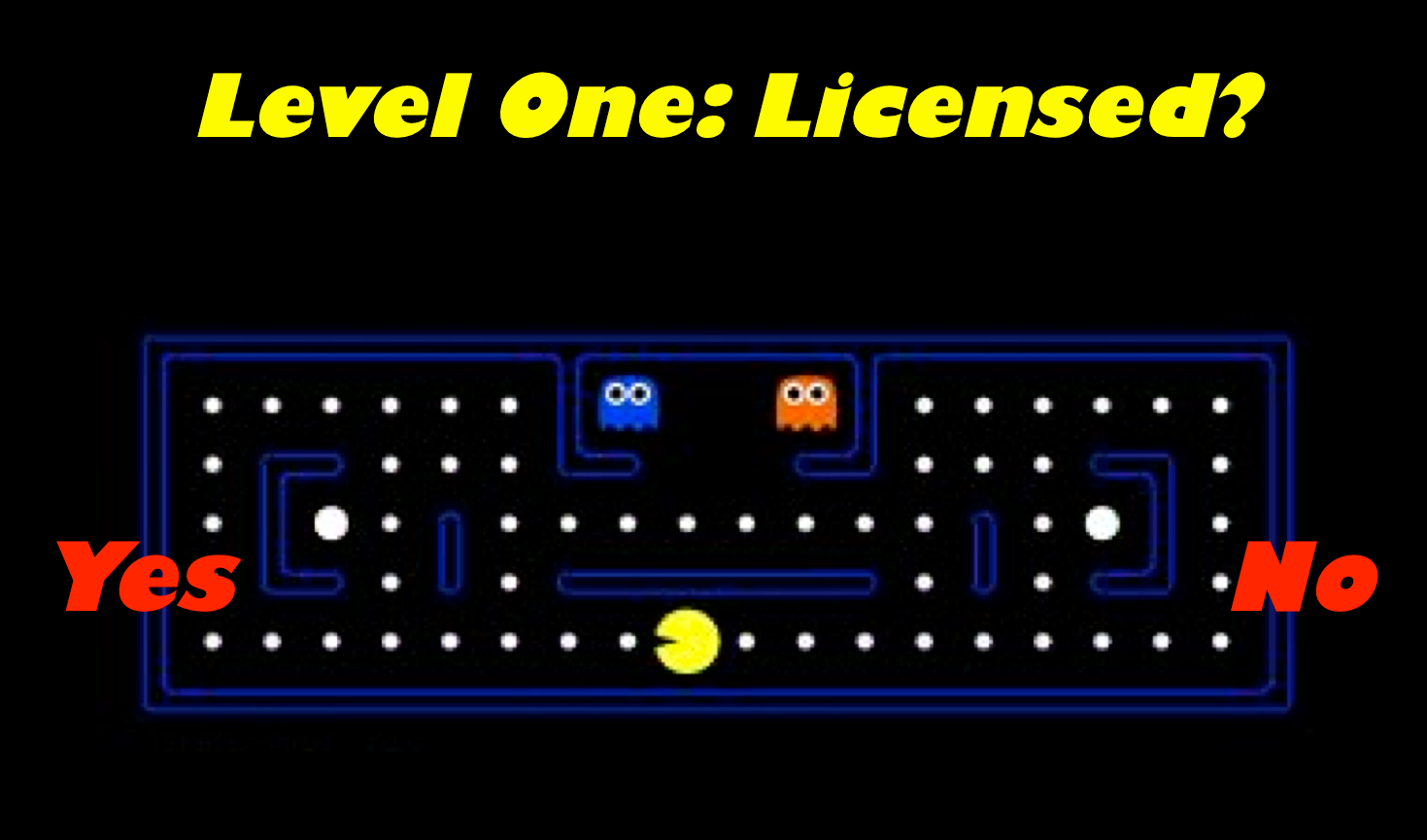
Level one is both relatively straightforward and also utterly crucial. Is the work you want to use governed by a license agreement? As a hint, pretty much everything available digitally is licensed, and licenses trump copyright. Want to use that full-page scan of a Victorian-era plate in a book? Better make your own scan unless your use of the professional scan falls within the terms of their license agreement. Your own scan will be totally fine to do whatever you want with because the original is out of copyright. But the professional scan is almost certainly brought to you by a license agreement.

If the work you want to use is licensed, the Use-Man game is over. Follow the license agreement and all will be well.

If the work you want to use is not licensed, continue on to Level Two!

Level Two

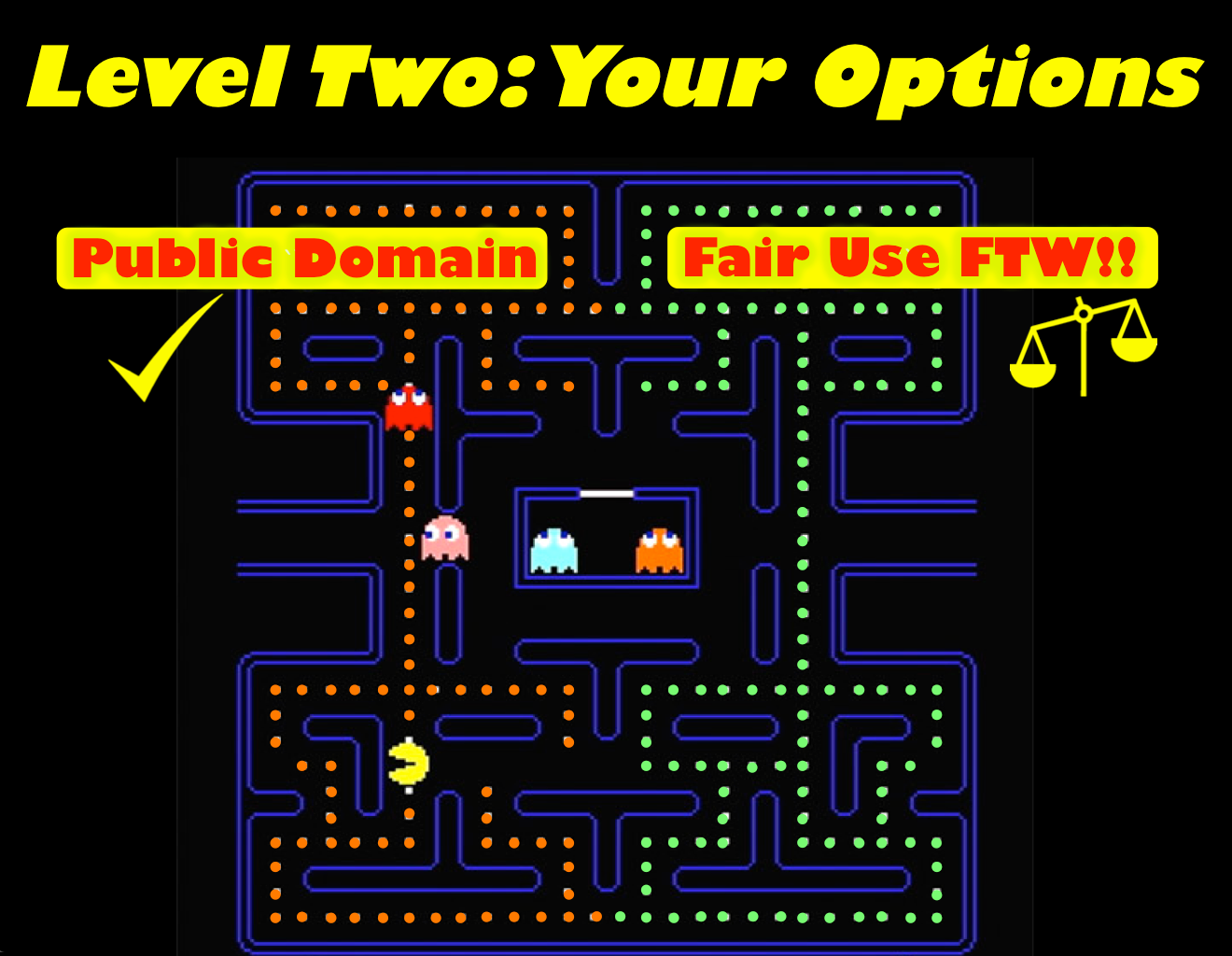
In level two there are two ways to win! Either you find that the work you want to use is in the Public Domain or you find that your intended use of the work falls under Fair Use. In either case you’re in the clear. You win!

Note that Public Domain does NOT mean “generally available to the public.” It means that there are no copyright restrictions on the work.

Note also that the four factor test for Fair Use does not require that every factor come up strongly in favor of fair use as long as the four together, considered as a whole, favor fair use. As Aufderheide and Jaszi say, “A typical fair-use calculation today can be distilled into three questions:

  1. Was the use of copyrighted material for a different purpose, rather than just reuse for the original purpose and for the same audience? […]
  2. Was the amount of material taken appropriate to the purpose of the use?
  3. Was it reasonable within the field or discipline it was made in? […]” (Aufderheidi and Jaszi p. 24)
It’s all about context and appropriateness. Luckily for us, judging context and appropriateness is something that we all do all the time as scholars within our communities. So don’t be scared! And remember your fruity power-ups!

What happens if you don’t win the game of Use-Man? You can decide either to use different material for your work, or to ask for permission from the copyright holder. But Fair Use was built for exactly the kind of work that we do in our teaching and research, so know your rights, know that they are written into the law itself,*** and keep an eye out for power-ups!

Finally, you may have noticed that I never once said “as long as you cite your sources.” That’s because none of this has anything to do with the ethics and rhetoric of attribution. Copyright is about the legality of use; citation is about the ethical and rhetorical culture of use.

* And yes, I am relying heavily on the idea of transformative use here. No actual arcade game was harmed in the making of this talk.

** Digital archives of text meant to be searched are, apparently, fundamentally different from individual books meant to be read.

*** “The fair use of a copyrighted work, including such use by reproduction in copies or phonorecords or by any other means specified by that section, for purposes such as criticism, comment, news reporting, teaching (including multiple copies for classroom use), scholarship, or research, is not an infringement of copyright.” (Title 17, Section 107, emphasis mine)

Aufderheide, Patricia, and Peter Jaszi. 2011. Reclaiming Fair Use: How to Put Balance Back in Copyright. Chicago: University of Chicago Press.

3 Comments
css.php